36.1 Choosing Where to Stay in Norway
Accommodation can strongly influence the cost and convenience of a Norway trip.
The main choices are: hotels, hostels, guesthouses, cabins and hytter, campsites, motorhome pitches, DNT mountain cabins, apartments, holiday homes, unique Arctic accommodation.
The best choice depends on your route, season, budget and transport.
36.2 Hotels
Hotels are the simplest option for most city travellers.
They range from: budget hotels, business hotels, boutique hotels, waterfront hotels, historic hotels, luxury properties.
Hotels are particularly convenient when you are travelling by train or bus because many are located close to city centres and transport hubs.
36.3 Hostels
Hostels are useful for: solo travellers, backpackers, students, young travellers, long trips.
Accommodation may include: dormitory beds, private rooms, shared kitchens, shared bathrooms, common areas.
For longer trips, a hostel kitchen can significantly reduce food costs.
36.4 Guesthouses and B&Bs
Guesthouses can provide a more personal experience than large hotels.
They are especially common in: smaller towns, fjord communities, coastal villages, rural areas.
Check whether breakfast, parking and private bathrooms are included.
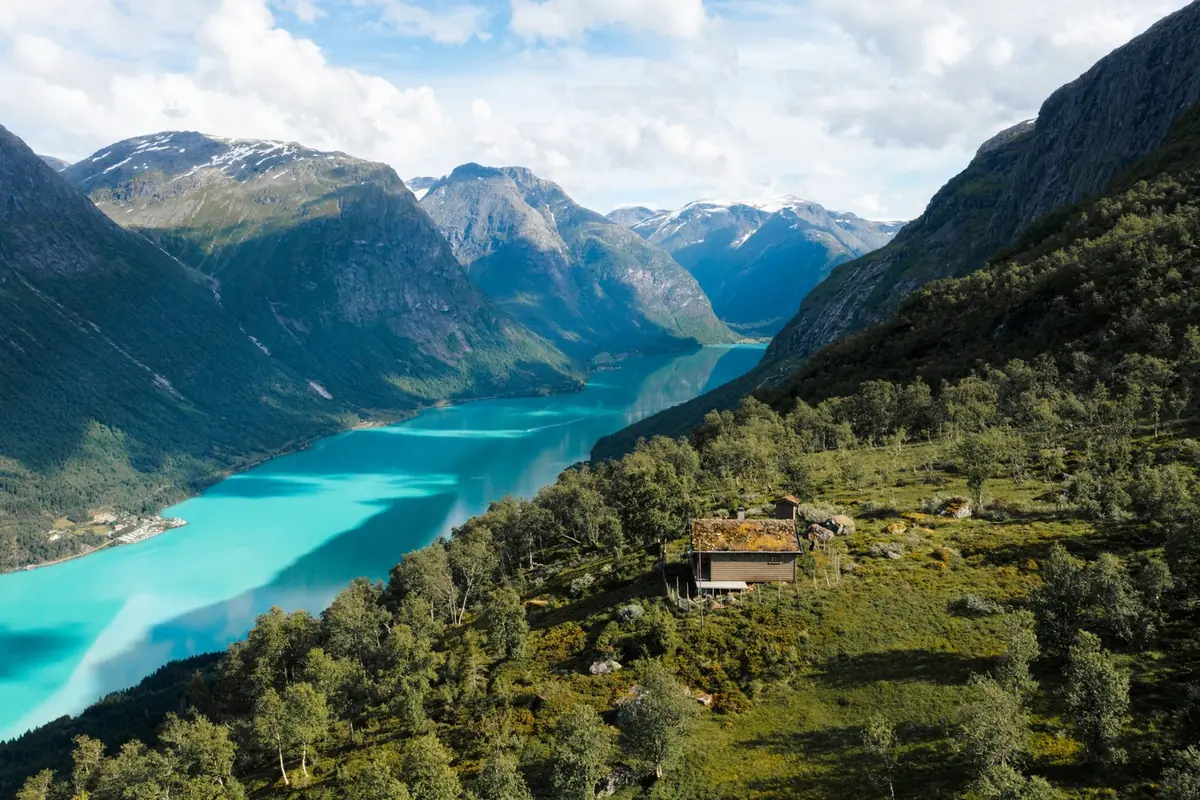
36.5 Cabins — Hytter
The Norwegian hytte is an important part of Norwegian travel culture.
Cabins range from simple campsite cabins to large, fully equipped holiday homes.
Typical facilities may include: beds, kitchen, refrigerator, cooking equipment, bathroom, living area, terrace.
A cabin with a kitchen can be particularly useful for families and couples.
36.6 Why Cabins Can Be Good Value
A cabin can combine accommodation + kitchen + living space.
Instead of booking hotel + restaurant, you may be able to use cabin + supermarket + cooking.
This can reduce the overall trip budget.
Always compare the complete price, including: cleaning fees, linen, electricity, final charges, minimum stay.
36.7 Campsites
Norway has campsites throughout the country.
They may provide: tent pitches, motorhome pitches, caravan spaces, cabins, shared kitchens, toilets, showers, laundry, electricity.
Designated campsites are often the easiest option for first-time campers.
Visit Norway recommends using designated campsites and motorhome pitches whenever possible.
36.8 Wild Camping
Norway's right to roam, allemannsretten, provides extensive opportunities to experience nature.
However, it does not mean that you can camp anywhere.
Wild camping generally applies to suitable uncultivated/open country.
You must respect: private property, cultivated land, wildlife, local restrictions, other visitors.
36.9 The 150-Metre Rule
When wild camping, the tent should normally be at least 150 metres from the nearest inhabited house or cabin.
This rule is one of the most important things international visitors should understand before camping in Norway.
36.10 The Two-Night Rule
Normally, you can stay in the same wild-camping location for up to two nights.
Longer stays may be possible in remote mountain areas or where local conditions allow it.
Always check local restrictions.
36.11 Where You Cannot Simply Camp
Do not assume that an attractive field is available for camping.
The right to roam does not generally cover: cultivated fields, gardens, private areas around homes, building plots, industrial areas, certain fenced/restricted areas.
Respect signs and local regulations.
36.12 Leave No Trace
When camping: take rubbish with you, avoid damaging vegetation, keep distance from wildlife, avoid disturbing residents, use toilets where available, keep noise low, follow fire restrictions.
Norway's visitor guidelines emphasise leaving nature as you found it and respecting wildlife and local communities.
36.13 DNT Mountain Cabins
The Norwegian Trekking Association (DNT) operates a nationwide network of more than 600 cabins.
They include: staffed cabins, self-service cabins, no-service cabins.
DNT membership provides member prices at many cabins and access to the DNT key system for eligible self-service/no-service cabins.
36.14 Self-Service and No-Service Cabins
These cabins are designed for independent travellers.
Depending on the cabin, you may find: beds, mattresses, kitchen, cooking equipment, firewood, food supplies, dining area.
You should not assume every cabin has identical facilities. Check the individual cabin before travelling.
36.15 DNT Cabin Prices
Self-service and no-service cabins are usually much cheaper than staffed cabins. Check current DNT prices for the cabin you plan to use at dnt.no.
Prices vary by cabin and membership status.
Check the individual DNT cabin before booking.
36.16 DNT Membership
Current DNT membership includes: standard adult NOK 885, youth 13–25 NOK 375, senior NOK 695, family NOK 1,580.
These figures change, so check them again before booking.
For travellers planning several mountain nights, membership can become useful because members receive discounted accommodation.
36.17 DNT App
DNT's current app can be used for: membership information, cabin information, payments, food purchases, offline functionality.
DNT Stavanger and surrounding areas currently state that the app can be used for payment at self-service and no-service cabins, including recording purchases offline when there is no mobile coverage.
36.18 Staffed Mountain Lodges
Staffed DNT lodges can provide a much more complete experience.
Depending on the lodge, a stay can include: bed, breakfast, dinner, packed lunch, shower.
For example, DNT's 2026 prices at several staffed cabins start at about NOK 1,095 per adult member for a dormitory bed with half board (DNT pension); non-member prices are higher.
Exact prices vary by lodge.
36.19 City Accommodation
For cities, location can be more important than saving a small amount on the room.
A central hotel may reduce: bus journeys, taxi costs, walking with luggage, airport-transfer complexity.
This can make a slightly more expensive hotel economical overall.
36.20 Oslo — Where to Stay
Useful areas: City Centre (best for first-time visitors and major attractions), Sentrum/Karl Johans gate (convenient for Central Station, attractions, restaurants, shopping), Grünerløkka (good for cafés, restaurants and a more neighbourhood-oriented experience), Aker Brygge/Tjuvholmen (useful for waterfront accommodation and restaurants).
For a short visit, proximity to public transport can save considerable time.
36.21 Bergen — Where to Stay
Useful areas: Sentrum (best for first-time visitors), Bryggen area (convenient for historic attractions), Bergen Station area (useful for railway travellers), Nordnes (a quieter central neighbourhood).
If your itinerary includes fjord tours, staying centrally can simplify early departures.
36.22 Stavanger — Where to Stay
Useful areas: Vågen/Harbour (close to Old Stavanger, restaurants, city centre, fjord excursions), Sentrum (convenient for public transport and walking), near Stavanger Station (useful for rail travellers), Sola (convenient when the airport is the priority).
36.23 Trondheim — Where to Stay
For most visitors, Trondheim city centre is the easiest base.
It provides access to: Nidaros Cathedral, Bakklandet, restaurants, railway station, local transport.
36.24 Tromsø — Where to Stay
Central Tromsø is particularly convenient for: Northern Lights tours, restaurants, museums, airport connections, city buses.
For winter travel, a central base can reduce the need for taxis in difficult weather.
36.25 Lofoten — One Base or Several?
Lofoten is spread over a long chain of islands.
Possible bases include: Svolvær, Henningsvær, Leknes, Reine, Å.
One-base strategy — simpler accommodation management. Multi-base strategy — less daily travel.
For a road trip, two or three bases can work well. For car-free travel, choose bases with strong bus connections.
36.26 Fjord Accommodation
Fjord accommodation can include: hotels, cabins, guesthouses, farm stays, waterfront lodges.
Staying near the fjord can create a memorable experience, but remote properties may require a car or limited public transport.
Always check the final connection before booking.
36.27 Farm Stays
Farm accommodation can provide: local food, rural landscapes, family experiences, animals, traditional buildings.
These stays can be particularly attractive for travellers who want something beyond a standard hotel.
36.28 Historic Hotels
Norway also has historic properties such as: manor houses, wooden hotels, mountain lodges, former trading posts, coastal hotels.
They can add cultural character to an itinerary.
36.29 Unique Accommodation
Norway offers unusual stays such as: glass cabins, lighthouse accommodation, rorbuer fishing cabins, Arctic lodges, snow hotels, treehouses, mountain lodges.
These are usually experience-focused rather than budget options.
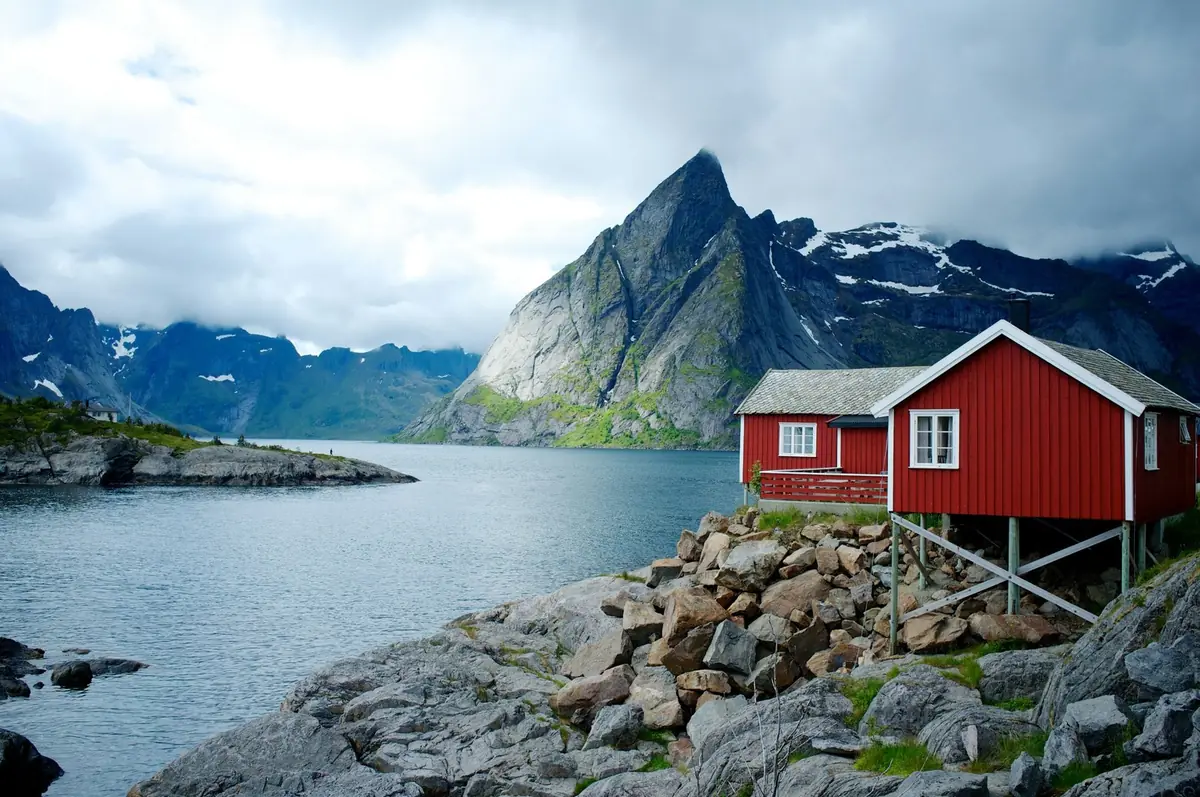
36.30 Rorbuer — Fishing Cabins
Traditional rorbuer are particularly associated with northern coastal Norway.
They can be found in places such as: Lofoten, Vesterålen, northern coastal communities.
Many have been modernised with: kitchens, bathrooms, heating, Wi-Fi.
They combine accommodation with local fishing heritage.
36.31 Arctic Accommodation
Northern Norway offers distinctive accommodation such as: wilderness lodges, glass cabins, snow hotels, fishermen's cabins, coastal hotels.
For Northern Lights travel, consider: darkness, cloud conditions, distance from city lights, transport, tour pickup location.
A beautiful accommodation does not guarantee Northern Lights visibility.
36.32 Winter Accommodation
Winter travellers should check: heating, snow access, road access, public transport, cancellation rules, restaurant opening hours, grocery availability.
Remote summer accommodation may operate differently in winter.
36.33 Summer Accommodation
Summer is peak travel season in many parts of Norway.
Popular destinations can become busy, particularly: Lofoten, Bergen, Geiranger, Flåm, Tromsø, Preikestolen area.
Book popular accommodation earlier than you would for a quiet-season trip.
36.34 Shoulder Season
Spring and autumn can provide a different travel experience.
Potential advantages include: fewer visitors, different scenery, possible lower accommodation rates.
But some ferries, hiking facilities, restaurants, tours, mountain roads may operate on reduced schedules.
36.35 Family Accommodation
Families should look for: family rooms, apartments, cabins, kitchens, laundry, parking, nearby supermarkets.
A kitchen can be particularly valuable for families because restaurant costs multiply quickly.
36.36 Accommodation for Couples
Couples may prefer: fjord-view hotels, boutique hotels, waterfront cabins, rorbuer, mountain lodges, unique glass cabins.
When comparing properties, consider the complete experience rather than room price alone.
36.37 Accommodation for Solo Travellers
Solo travellers can reduce costs through: hostels, DNT cabins, guesthouses, shared cabins, central hotels near public transport.
Location becomes particularly important because taxis can be expensive.
36.38 Accommodation Near Train Stations
For a car-free itinerary, accommodation near railway stations can be extremely practical.
Useful examples include: Oslo Central Station, Bergen Station, Trondheim Central Station, Stavanger Station, Bodø Station.
This can make early departures significantly easier.
36.39 Accommodation Near Airports
Airport hotels are useful when: your flight is very early, your arrival is late, public transport does not match your flight, you have a long connection.
However, do not automatically book an airport hotel. Compare: airport hotel vs city hotel + airport transport.
36.40 Booking Checklist
Exact location, check-in time, check-out time, cancellation policy, taxes/fees, breakfast, parking, kitchen, Wi-Fi, bathroom, bed configuration, public transport, luggage storage, reception hours.
36.41 Non-Refundable vs Flexible Rates
A non-refundable room can be cheaper.
But flexible booking may be valuable when travelling in Norway because: weather can change, ferries can be cancelled, mountain roads can close, hiking plans may change.
For complicated itineraries, flexibility can have real value.
36.42 Accommodation Scams and Fake Listings
Before booking, verify: property name, reviews, address, cancellation conditions, payment method, contact details.
Be cautious if someone asks you to move the entire booking/payment conversation away from the official booking platform without a clear reason.
36.43 Motorhome Accommodation
Motorhome travellers should distinguish between: legal overnight parking, campsites, motorhome service areas, private land, restricted parking.
Do not assume that every scenic parking area allows overnight stays.
Follow signs and local regulations.
36.44 Fire Safety
Outdoor fires can be restricted, especially during dry periods.
Check current local fire rules before lighting a fire.
Use established fire facilities where available. Never leave a fire unattended.
36.45 Accommodation and Responsible Tourism
Choose businesses that: respect local communities, manage waste responsibly, reduce unnecessary environmental impact, follow local rules, support local employment.
When camping, designated campsites can help support local communities and provide safer facilities.
36.46 Accessibility
Travellers with mobility requirements should check: step-free entrance, lift, accessible bathroom, room dimensions, bed height, parking, public transport access.
Do not rely only on the word "accessible". Ask the property for specific details when necessary.
36.47 Accommodation Planning by Trip Type
City break — central hotel/hostel. Budget trip — hostel/campsite. Family road trip — cabin/apartment. Fjord journey — hotel/cabin/guesthouse. Mountain hiking — DNT cabin. Lofoten road trip — rorbuer/cabin/hotel. Northern Lights — hotel/lodge/glass cabin. Motorhome — campsite/motorhome pitch. Long trip — mix of accommodation.
36.48 Three-Night Example
Oslo — 2 nights, central hotel. Bergen — 1 night, central hotel.
This works well for a short city-focused trip.
36.49 Seven-Night Example
Oslo — 2 nights. Bergen — 2 nights. Flåm — 1 night. Stavanger — 2 nights.
This combines cities with fjord scenery without constantly changing accommodation.
36.50 Ten-Night Example
Oslo — 2 nights. Bergen — 2 nights. Flåm/Voss — 2 nights. Stavanger — 2 nights. Trondheim — 2 nights.
A mixture of hotels and guesthouses can keep the trip flexible.
36.51 Mountain-Hiking Example
Night 1 — valley accommodation. Night 2 — DNT mountain cabin. Night 3 — DNT mountain cabin. Night 4 — town hotel.
This allows travellers to combine wilderness with comfortable recovery nights.
36.52 Lofoten Accommodation Strategy
For a longer Lofoten trip: Nights 1–2 Svolvær. Nights 3–4 Leknes/Henningsvær area. Nights 5–7 Reine/Å area.
This reduces backtracking on a self-drive itinerary.
For a car-free trip, adjust bases according to bus connections.
36.53 Northern Norway Strategy
For a northern itinerary Tromsø → Senja → Vesterålen → Lofoten, consider: 2–3 nights in Tromsø, 2 nights in Senja, 2 nights in Vesterålen, 3 nights in Lofoten.
Do not book remote accommodation until you have confirmed the transport connection.
36.56 Accommodation Checklist
Price checked for exact dates, cancellation policy checked, location checked on map, transport connection checked, seasonal opening confirmed, breakfast confirmed, parking confirmed, kitchen confirmed, accessibility confirmed, check-in time confirmed, additional fees checked, weather/road access considered, reviews checked, booking confirmation saved offline.
36.57 Quick Reference
City trip: hotel/hostel. Budget: hostel/campsite. Family: cabin/apartment. Fjord: cabin/guesthouse/hotel. Mountain: DNT cabin. Lofoten: rorbuer/cabin/hotel. Northern Lights: hotel/lodge/glass cabin. Motorhome: campsite/pitch. Long trip: mix accommodation types.
36.58 Final Takeaway
Norway offers far more accommodation choices than the traditional hotel.
A well-planned trip can combine city hotel → fjord cabin → mountain DNT cabin → coastal rorbuer → Arctic lodge.
This can make accommodation part of the Norwegian experience rather than simply a place to sleep.
The most important rule is: choose accommodation according to your route, transport and season — not just the cheapest room price.
Always check the exact property, seasonal availability, current price, cancellation policy and transport connection before making a non-refundable booking.