37.1 Discovering Norwegian Food
Norwegian cuisine is strongly connected to the country's: long coastline, fjords, mountains, forests, farms, cold northern climate.
Seafood, lamb, dairy products, potatoes, bread, berries and locally produced meat all have important places in Norwegian food culture.
Modern Norwegian cuisine combines traditional ingredients with contemporary cooking techniques.
37.2 The Norwegian Seafood Tradition
Norway's coastline makes seafood one of the country's defining foods.
Important species include: salmon (laks), cod (torsk), Arctic cod (skrei), halibut (kveite), mackerel (makrell), herring (sild), pollock/coalfish (sei), haddock (hyse), prawns (reker), mussels (blåskjell), king crab (kongekrabbe), langoustine (sjøkreps).
Visit Norway particularly highlights skrei from Northern Norway during the January–April season.
37.3 Norwegian Salmon
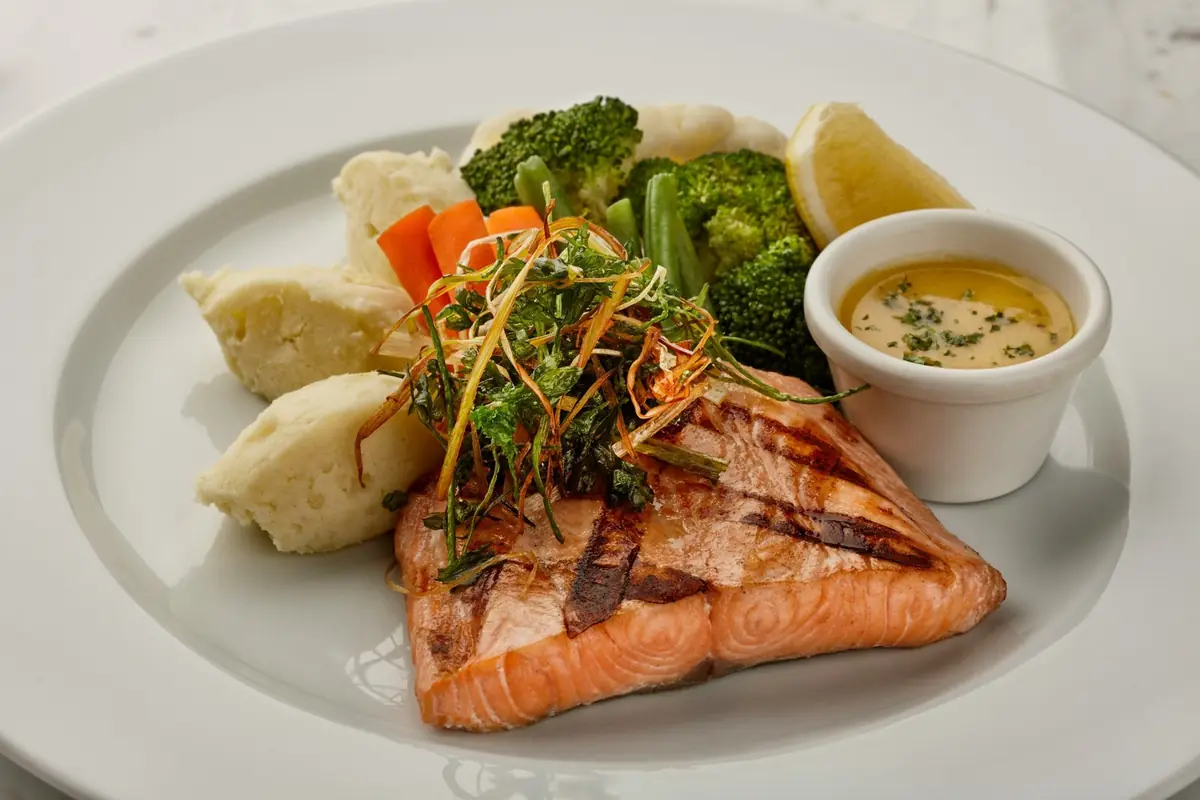
Norwegian salmon is one of the country's best-known food exports.
You can find it: grilled, baked, smoked, cured, in soups, in salads, in sushi, in sandwiches.
Traditional preparations include gravlaks, cured salmon, and smoked salmon.
For visitors, salmon is one of the easiest Norwegian foods to try because it is widely available in supermarkets as well as restaurants.
37.4 Skrei — Arctic Cod
Skrei is migratory Arctic cod associated particularly with Northern Norway.
The traditional season is approximately January–April.
Its firm, lean white flesh makes it popular in restaurants and local markets.
For a winter Northern Norway trip, skrei is an excellent seasonal food to look for.
37.5 Stockfish — Tørrfisk
Tørrfisk is unsalted dried fish, traditionally associated with Arctic Norway and especially Lofoten.
It has a long history as both food and an important export.
You may encounter it as a snack, in restaurants, in traditional dishes, in fish markets.
Lofoten remains strongly associated with stockfish production.
37.6 Clipfish — Klippfisk
Klippfisk is salted and dried fish.
It is particularly associated with: Ålesund, Kristiansund, Northwest Norway.
It is also an important ingredient in bacalao, a dish with strong connections to Norway's coastal food culture.
37.7 Norwegian Fish Soup
Fiskesuppe is a popular Norwegian-style fish soup.
Depending on the recipe, it may contain: fish, prawns, mussels, cream, vegetables, herbs.
It is particularly enjoyable in coastal towns after a day outdoors.
37.8 Prawns — Reker
Fresh prawns are a classic Norwegian summer food.
A traditional serving may include: prawns, white bread, mayonnaise, lemon, dill.
Visit Norway describes eating fresh prawns outdoors in the sunshine as a popular Norwegian tradition.
37.9 King Crab
Northern Norway is one of the best places to experience king crab close to its Arctic source.
It can be enjoyed in: Kirkenes, Varanger, Finnmark, Northern coastal restaurants.
For many visitors, a king-crab meal becomes one of the highlights of a northern Norway trip.
37.10 Norwegian Brown Cheese — Brunost
Brunost is one of Norway's most recognisable foods.
It has: sweet flavour, caramel-like taste, brown colour, soft texture.
It is commonly eaten on: bread, crispbread, waffles.
Different varieties can be made from cow's milk, goat's milk or combinations.
37.11 How to Eat Brunost
A simple Norwegian breakfast combination: bread + butter + brunost.
Another classic: Norwegian waffle + brunost.
If you have never tried brunost, buy a small package from a supermarket before ordering an expensive restaurant version.
37.12 Norwegian Waffles — Vafler
Norwegian waffles are generally thinner and softer than many Belgian-style waffles.
They are often served with: sour cream, jam, brown cheese, butter, berries.
Waffles are strongly associated with Norwegian kos — a relaxed, comfortable social experience.
37.13 Lefse
Lefse is a traditional soft flatbread.
It can be served in sweet or savoury forms.
Possible fillings include: butter, sugar, cinnamon, cheese, meat, salmon.
Different regions have their own traditions.
37.14 Fårikål
Fårikål is a traditional lamb and cabbage dish and is officially recognised by Visit Norway as Norway's national dish.
Typical ingredients include: lamb, cabbage, black pepper, potatoes.
It is particularly associated with autumn.
37.15 Fenalår
Fenalår is cured leg of lamb.
It is traditionally sliced thinly and served as: a snack, part of a buffet, a festive meal, a traditional food plate.
It is an excellent choice for visitors who want to experience Norwegian cured-meat traditions.
37.16 Reindeer
Reindeer meat has an important connection with Northern Norway and Sámi food traditions.
It can be served as: stew, fillet, dried/cured meat, modern restaurant dishes.
Visit Norway highlights reindeer and other wild game as part of Norway's regional food culture.
37.17 Elk — Elg
Elk is another traditional game meat.
It may appear as: burger, steak, sausage, stew.
It is more commonly encountered outside major tourist restaurants, particularly in rural and mountain regions.
37.18 Rømmegrøt
Rømmegrøt is a traditional sour-cream porridge.
It is associated with Norwegian farm and mountain traditions.
It may be served with: butter, cinnamon, sugar.
It is particularly interesting to try at traditional farms or cultural-food venues.
37.19 Norwegian Bread
Bread is a major part of everyday Norwegian food culture.
A typical breakfast may include: wholegrain bread, cheese, ham, salmon, eggs, brown cheese, jam.
Bread is also one of the easiest ways to keep a travel-food budget under control.
37.20 Norwegian Breakfast
Many Norwegian hotels offer substantial breakfast buffets.
A typical buffet may include: bread, cheese, cold cuts, eggs, salmon, yogurt, fruit, cereals, coffee, juice.
Visit Norway specifically highlights Norwegian hotel breakfasts as an important part of the country's food experience.
37.21 Coffee Culture
Coffee is deeply integrated into Norwegian everyday life.
You will find cafés in: city centres, shopping areas, railway stations, villages, mountain destinations.
A simple coffee and pastry stop can be one of the easiest ways to experience Norwegian kos.
37.22 Norwegian Bakeries
Look for local bakeries selling: boller, cinnamon buns, pastries, cakes, bread, sandwiches.
A bakery breakfast or lunch can sometimes be less expensive than a full restaurant meal.
37.23 Norwegian Cakes and Sweet Treats
Popular choices include: Kvæfjord cake, skillingsbolle, Norwegian waffles, boller, apple cakes, berry desserts, chocolate cakes.
Regional variations are common.
37.24 Berries and Local Produce
Norway's forests and mountains provide berries such as: bilberries, cloudberries, raspberries, strawberries.
Norwegian fruit and berry production is also an important part of regional food culture.
37.25 Hardanger Fruit
Hardanger is particularly associated with: apples, pears, plums, apple juice, cider.
The fjord landscape and agricultural areas make food tourism an important part of the region.
37.26 Norwegian Cheese
Norway has much more cheese than brunost.
Modern Norwegian cheesemakers produce: blue cheeses, Gouda-style cheeses, farm cheeses, goat cheeses.
Norwegian cheeses have received international awards, and Visit Norway highlights the country's large network of local creameries.
37.27 Stavanger & Jæren Food
The Stavanger region is particularly strong in food tourism.
The area combines: North Sea seafood, Jæren agriculture, local meat, cheese, vegetables, tomatoes, farm shops.
Visit Norway describes Stavanger and Jæren as a major food destination with both traditional and contemporary restaurants.
37.28 Bergen Food
Bergen's maritime history makes seafood an obvious choice.
Try: fish soup, salmon, cod, prawns, fish cakes, local seafood.
The Fish Market is one of the city's best-known food experiences.
37.29 Ålesund & Kristiansund
Northwestern coastal Norway is strongly associated with: klippfisk, bacalao, cod, seafood, shellfish.
Ålesund and Kristiansund are particularly connected with the historic clipfish trade.
37.30 Trondheim & Trøndelag
Trøndelag has a strong agricultural and food-production tradition.
Look for: local cheeses, dairy products, meat, salmon, farm products, bakery products.
The region is also well known for innovative modern cuisine.
37.31 Røros Food
Røros is one of Norway's important regional food destinations.
The area is associated with: dairy, cheese, cured meats, reindeer, local farms.
Visit Norway highlights Røros as a food region with numerous local producers.
37.32 Northern Norway Food
Northern Norway offers particularly distinctive Arctic ingredients.
Look for: king crab, skrei, stockfish, reindeer, Arctic berries, prawns, local fish.
Northern Norway is especially interesting for seafood lovers.
37.33 Lofoten Food
Lofoten's food identity is strongly connected to fishing.
Look for: stockfish, cod, salmon, fish soup, seafood, local lamb.
A meal in a traditional fishing village can combine food with the region's maritime history.
37.34 Vegetarian Food
Vegetarian food is increasingly easy to find in Norway.
Larger cities such as Oslo, Trondheim, Stavanger, Bergen have numerous vegetarian and vegan options.
In smaller towns, choices may be more limited, so checking menus before travelling can help.
37.35 Vegan Travel
Vegan travellers can usually find: plant-based burgers, vegan cafés, salads, Asian food, plant-based milk, vegan bakery items.
Supermarkets also offer a growing selection of plant-based products.
37.36 Halal Food
Halal options are most readily found in larger cities and areas with diverse restaurant scenes.
Travellers should: check the restaurant menu, ask whether meat is halal, ask about preparation, confirm ingredients when necessary.
Do not assume that a restaurant serving Middle Eastern, South Asian or Turkish food is automatically halal.
37.37 Vegetarian, Vegan & Halal Planning
For remote destinations, buy backup food from a supermarket.
This is particularly useful when travelling through: mountain areas, small islands, remote coastal villages, long scenic routes.
37.38 Supermarket Food
Norwegian supermarkets can be excellent for budget travellers.
Useful foods include: bread, cheese, yogurt, eggs, fruit, salads, fish, ready meals, sandwiches, snacks.
A supermarket lunch can cost substantially less than a restaurant meal.
37.39 Current Restaurant Price Reference
Visit Norway's current reference figures list approximately: budget restaurant meal NOK 190–350; three-course mid-range restaurant NOK 650–1,500; cappuccino NOK 35–65.
These are rough estimates rather than fixed prices.
37.40 Tipping in Norway
Tipping is not compulsory in Norway.
Visit Norway states that tipping is generally not common, although customers sometimes tip in restaurants and bars when they are happy with the service or food.
Where people choose to tip, 5–15% is a typical range cited by Visit Norway. Do not feel pressured to tip simply because a payment terminal displays a tipping option.
37.41 Alcohol and Restaurant Costs
Alcohol can significantly increase a restaurant bill.
If you are budgeting, food-only and food + alcoholic drinks should be treated as separate categories.
Travellers can also check Norway's current alcohol-sale rules before planning purchases.
37.42 Tap Water
Norway has high-quality drinking water in many locations.
A reusable bottle is useful for: cities, hiking, road trips, train journeys, camping.
When using natural water sources, follow local advice and avoid drinking untreated water when its safety is uncertain.
37.43 Food Markets
Food markets can be useful for trying several foods in one place.
Look for: seafood, cheese, bakery products, local meat, fruit, prepared meals.
Markets are particularly good for travellers who want to sample Norwegian food without committing to a long restaurant meal.
37.44 Food Festivals
Norway hosts many local food festivals throughout the year.
Examples may focus on: seafood, cheese, local produce, reindeer, cider, traditional food, Christmas food.
Festival dates change every year, so check the exact dates before building a fixed itinerary.
37.45 Christmas Food
Norwegian Christmas food includes regional traditions such as: ribbe, pinnekjøtt, lutefisk, Christmas sausages, pickled herring, Christmas cakes, gingerbread.
Restaurants and hotels may offer special Christmas menus during December.
37.46 Seasonal Food Calendar
Winter — skrei, Christmas foods. Spring — seafood, early vegetables. Summer — prawns, mackerel, berries. Autumn — lamb, game, mushrooms, berries. Christmas — ribbe, pinnekjøtt, festive foods.
Availability varies by region and producer.
37.47 Food Road Trips
A food-focused road trip can include: Stavanger → Jæren → Hardanger → Bergen, or Trondheim → Røros → Gudbrandsdalen, or Tromsø → Lyngen → Finnmark.
Use local farm shops, bakeries, fish markets and regional producers along the route.
37.48 3-Day Food Experience
- Day 1 — Oslo: Norwegian breakfast, bakery lunch, traditional dinner.
- Day 2 — Bergen: seafood lunch, fish market visit, local restaurant.
- Day 3 — Bergen: hotel breakfast, fjord-area café, Norwegian bakery.
37.49 5-Day Food Experience
Day 1: Oslo — modern Norwegian cuisine. Day 2: Oslo — traditional food. Day 3: Bergen — seafood. Day 4: Fjord region — local farm products. Day 5: Bergen — bakery and seafood.
37.50 7-Day Food Experience
Combine: Norwegian breakfast, seafood, brunost, waffles, bakery food, traditional lamb, local berries, regional cheese.
The objective is variety rather than eating expensive restaurant food every day.
37.51 14-Day Food Challenge
During a two-week trip, try to find at least: salmon, skrei or cod, brunost, Norwegian waffle, lefse, fårikål, reindeer, fenalår, stockfish, prawns, Norwegian cheese, local berries, Norwegian bakery item.
Some items are seasonal, so availability is not guaranteed.
37.52 Food Budget Strategy
Budget — breakfast supermarket, lunch packed lunch/bakery, dinner supermarket/simple meal.
Mid-range — breakfast hotel, lunch café, dinner restaurant.
Premium — breakfast hotel, lunch restaurant, dinner premium restaurant.
37.53 Save Money on Food
- Supermarket breakfast. 2. Packed lunch. 3. Bakery meals. 4. Free hotel breakfast where included. 5. Cabin cooking. 6. One major restaurant meal per day. 7. Reusable water bottle. 8. Avoid unnecessary drinks.
37.54 What to Buy From a Norwegian Supermarket
A simple travel basket: bread, cheese, brunost, yogurt, eggs, fruit, smoked salmon, salad, sandwich fillings, coffee, snacks.
This can create a surprisingly good Norwegian food experience without a restaurant every day.
37.57 Food Checklist
Check restaurant opening hours, seasonal menus, dietary requirements, halal availability, vegetarian/vegan options, food-market dates, food festival dates, supermarket locations, breakfast inclusion, current restaurant prices, carry a reusable bottle.
37.58 Food Vocabulary
Fish — Fisk. Salmon — Laks. Cod — Torsk. Arctic cod — Skrei. Halibut — Kveite. Mackerel — Makrell. Prawns — Reker. Mussels — Blåskjell. King crab — Kongekrabbe. Cheese — Ost. Brown cheese — Brunost. Bread — Brød. Butter — Smør. Milk — Melk. Coffee — Kaffe. Breakfast — Frokost. Lunch — Lunsj. Dinner — Middag. Restaurant — Restaurant. Menu — Meny. Vegetarian — Vegetarisk. Vegan — Vegansk.
37.59 Quick Reference
- Must-try seafood: salmon, cod, skrei, prawns, king crab.
- Classic foods: fårikål, lefse, brunost, waffles, fenalår.
- Northern specialties: king crab, stockfish, reindeer, skrei.
- Western coast: seafood, clipfish, bacalao.
- Hardanger: apples, cider, local produce.
- Røros: cheese, dairy, meat and local producers.
- Budget strategy: supermarket + bakery + occasional restaurant.
- Tipping: optional; not compulsory.
- Best food experience: try regional products where they are produced.
37.60 Final Takeaway
Norwegian food is much more diverse than salmon and brown cheese.
A journey through Norway can take you from North Sea seafood to fjord fruit farms to mountain cheeses to Arctic king crab to Sámi-influenced northern food traditions.
The best approach is to eat according to the region you are visiting.
In Stavanger, explore the food culture of Jæren and the North Sea. In Bergen, try seafood. In Ålesund and Kristiansund, look for clipfish and bacalao. In Røros, explore local dairy, meat and reindeer products. In Northern Norway, try skrei, king crab and Arctic ingredients.
And throughout the country, leave room for coffee + waffle + brunost.