Norway's national parks protect some of the country's most spectacular landscapes, from high mountain plateaus and glaciers to forests, wetlands, islands and Arctic wilderness.
For travellers, national parks offer opportunities for hiking, wildlife watching, photography, fishing, skiing, camping and simply experiencing nature away from cities.
Norway currently has 47 national parks, including seven in Svalbard. Four are marine national parks. Almost 85 percent of Norway's national parks are located in mountainous areas.
The purpose of a national park is not simply to create a tourist attraction. These areas protect important ecosystems and landscapes for future generations. Visitors are welcome, but they must follow local regulations and respect wildlife.
61.1 Norway's National Parks at a Glance
Norway's national parks represent several major landscape types: high mountains, glaciers, alpine valleys, forests, wetlands, coastal landscapes, islands, Arctic wilderness, marine environments.
Some parks are easily accessible from roads and towns, while others require long hikes or boat journeys.
This means that a national park holiday does not necessarily mean difficult mountain trekking.
Families, photographers and casual travellers can enjoy accessible areas, while experienced hikers can undertake multi-day journeys.
61.2 Jotunheimen National Park
Jotunheimen is one of Norway's most famous mountain regions.
It is known for: Norway's highest mountains, Galdhøpiggen, Glittertind, Besseggen, Gjende, glaciers, mountain valleys, DNT cabins, long-distance hiking.
The name Jotunheimen means "Home of the Giants."
For experienced hikers, the region offers some of Norway's most rewarding mountain journeys.
For less experienced visitors, scenic roads, mountain lodges and shorter walks provide easier alternatives.
61.3 Hardangervidda National Park
Hardangervidda is one of Europe's largest mountain plateaus.
The landscape is characterised by: open mountain terrain, lakes, rivers, wide valleys, sparse vegetation, snowfields, wild reindeer.
The plateau can feel enormous and remote.
Hardangervidda is also important for wild reindeer, making responsible behaviour particularly important.
Visitors should remain aware that weather can change rapidly even during summer.
61.4 Rondane National Park
Rondane was Norway's first national park.
It is known for: rugged mountain peaks, high plateaus, hiking, autumn colours, mountain lakes, wild reindeer, scenic roads.
Rondane is particularly attractive for travellers who want mountain scenery without necessarily undertaking the highest and most technical Norwegian peaks.
The surrounding roads and viewpoints make it possible to experience the landscape on a road trip as well.
61.5 Dovrefjell-Sunndalsfjella National Park
Dovrefjell is one of Norway's most distinctive wildlife regions.
It is especially famous for the musk ox, one of the world's oldest surviving large mammals.
The area also has: wild reindeer, mountain birds, Snøhetta, alpine landscapes, hiking trails.
The musk ox was reintroduced to Dovrefjell during the twentieth century after having disappeared from Europe.
Visitors should never approach musk oxen independently.
A minimum distance of 200 metres should be maintained, and guided tours are recommended for wildlife encounters.
61.6 Jostedalsbreen National Park
Jostedalsbreen protects one of Norway's most important glacier landscapes.
The park surrounds the Jostedalsbreen ice cap and includes spectacular valleys, mountains and glacier arms.
It is particularly attractive for: glacier viewing, hiking, photography, mountain scenery, guided glacier activities.
Famous glacier arms associated with the region include: Nigardsbreen, Briksdalsbreen, Bøyabreen, Kjenndalsbreen.
Glacier conditions change continuously, so visitors should follow local safety information.
61.7 Folgefonna National Park
Folgefonna is another important glacier landscape in western Norway.
It is located in the Hardanger region and combines glacier, mountains, valleys, waterfalls, fjords.
The park can be incorporated into a wider Hardanger itinerary.
Travellers can combine fjord villages and scenic roads with mountain and glacier experiences.
61.8 Femundsmarka National Park
Femundsmarka is very different from the dramatic fjord landscapes of western Norway.
It is characterised by: forest, lakes, rocky terrain, wilderness, canoeing, fishing, hiking.
It is particularly attractive to travellers seeking a quieter wilderness experience.
The landscape can feel remote even though it is accessible from settlements around Lake Femunden.
61.9 Rago National Park
Rago is located in Nordland near the Swedish border.
The landscape includes: rugged mountains, waterfalls, deep valleys, large boulders, forest, wilderness.
It is one of the more rugged national parks in Norway and is particularly suitable for experienced outdoor travellers.
61.10 Saltfjellet-Svartisen National Park
This park in Nordland combines mountains and glacier landscapes.
It includes parts of the Saltfjellet mountain region and the Svartisen glacier system.
One of its most important geographical features is the Arctic Circle, which crosses the wider Saltfjellet region.
The landscape provides opportunities for: hiking, glacier viewing, photography, wildlife observation, scenic driving nearby.
61.11 Børgefjell National Park
Børgefjell lies in central Norway close to the Swedish border.
It is one of the country's more remote mountain areas.
The park is characterised by: mountains, lakes, rivers, forest, wilderness, wildlife.
It is particularly suitable for travellers who want solitude rather than large tourist facilities.
61.12 Varangerhalvøya National Park
Varangerhalvøya is located in Finnmark in far northern Norway.
The landscape is distinctly Arctic and sub-Arctic.
Visitors can experience: open tundra, Arctic vegetation, mountain plateaus, coastal landscapes, birdlife, remote wilderness.
The park is particularly interesting for birdwatchers and travellers exploring eastern Finnmark.
61.13 Svalbard's National Parks
Svalbard has seven national parks.
These protect an extraordinary Arctic environment containing: glaciers, mountains, sea ice, Arctic tundra, marine ecosystems, polar wildlife.
Svalbard is fundamentally different from mainland Norway.
Visitors should not treat it like an ordinary hiking destination.
Outside settlements, polar-bear safety is a serious consideration, and visitors should use qualified local guides and follow current local regulations. Visit Norway specifically recommends guided travel in Svalbard's remote areas.
61.14 Wildlife in Norway
Norway has an impressive range of wildlife.
Mammals: moose, reindeer, wild reindeer, musk ox, Arctic fox, red fox, deer, seals, whales, polar bears in Svalbard.
Birds: puffins, white-tailed eagles, golden eagles, sea eagles, ptarmigan, gannets, Arctic species.
Seeing wildlife is never guaranteed. Animals determine when and where they appear.
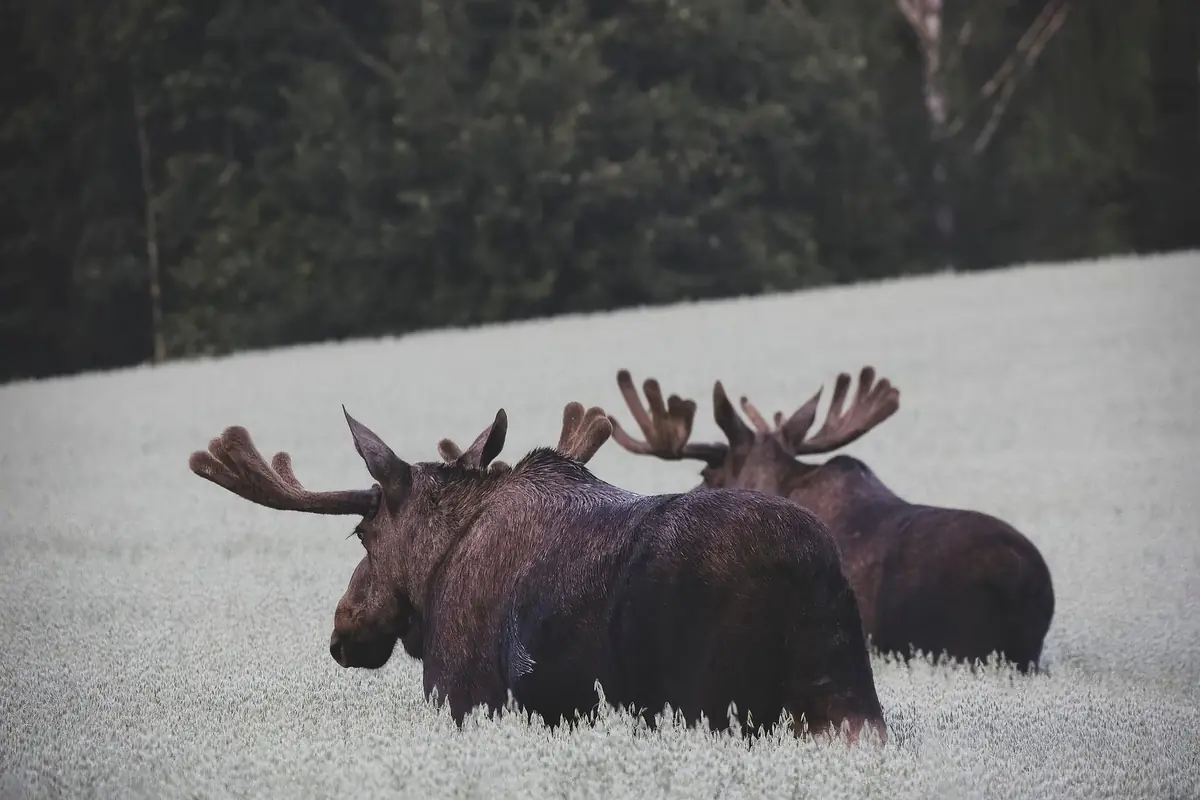
61.15 Moose — Norway's Forest Giant
The moose, or elg in Norwegian, is one of Norway's most recognisable animals.
Moose live in many forested parts of the country.
They can sometimes be seen along forest roads, near wetlands, at dawn, at dusk, during guided wildlife safaris.
Drivers should be particularly careful at dawn and dusk because moose can cross roads unexpectedly.
Never approach a wild moose for a photograph.
If a moose is close to a road, reduce speed and give it space.
61.16 Reindeer
Reindeer are strongly associated with northern Norway and the mountain regions.
There is an important distinction between wild reindeer and semi-domesticated reindeer associated with Sámi reindeer husbandry.
Wild reindeer are particularly important in mountain ecosystems.
They are sensitive to disturbance, especially during vulnerable periods.
If you encounter a herd: stay calm, keep your distance, do not chase them, do not block their route, do not attempt to approach for photographs.
Visit Norway recommends avoiding areas with wild reindeer during the calving season in May where possible.
61.17 Musk Ox
Musk oxen are among Norway's most unusual wildlife experiences.
They are found on Dovrefjell.
Although they may appear slow, they are powerful wild animals and can move surprisingly quickly.
The most important rule is distance. Stay at least 200 metres away.
If a musk ox becomes agitated, increase the distance immediately.
A guided safari is the safest way to look for them because experienced guides understand animal behaviour and local conditions.
61.18 Arctic Fox
The Arctic fox is associated with high Arctic and alpine environments.
It is much harder to see than a moose or reindeer.
Possible habitats include: high mountain areas, Arctic tundra, Svalbard, remote northern regions.
The Arctic fox is well adapted to cold conditions and seasonal changes.
Visitors should never feed wildlife in an attempt to attract an animal.
61.19 Whales
Norway's coast offers excellent opportunities for whale watching.
Vesterålen, particularly around Andenes, is well known for sperm whales.
Depending on location and season, visitors may also encounter: humpback whales, orcas, fin whales, minke whales, pilot whales, dolphins.
Whale sightings are never guaranteed because the animals are wild and move according to food availability.
Visit Norway notes that sperm whales can be seen along the Vesterålen coast throughout the year, while winter conditions in parts of Northern Norway can bring other whale species closer to coastal waters.
61.20 Whale-Watching Etiquette
A whale-watching trip should be about observing animals without disturbing them.
Do not: chase whales, attempt to touch them, feed them, make deliberate noises to attract them, use flashing lights to attract them, get unnecessarily close.
Choose operators that follow responsible wildlife practices.
The best photograph is not necessarily the closest photograph.
61.21 Puffins
Puffins are among Norway's most popular seabirds.
Important places to look for them include: Runde, Andøya, Lovund, Røst, other northern coastal bird colonies.
The best opportunities are generally during the breeding season when birds return to coastal nesting areas.
Bird cliffs can be extremely steep. Stay behind barriers and follow local signs.
61.22 White-Tailed Eagles
Norway has an important population of white-tailed eagles.
They are particularly associated with coastal Norway.
The northern part of the country is especially well known for them.
Good locations for birdwatching include: Lofoten, Vesterålen, Helgeland, Finnmark, western coastal areas.
A pair of binoculars can be much more useful than attempting to approach a bird for a close photograph.
61.23 Birdwatching in Norway
Norway offers birdwatching opportunities in almost every region.
Coastal cliffs — puffins, gulls, gannets. Wetlands — ducks, waders. Forests — woodpeckers, owls, songbirds. Mountains — ptarmigan, birds of prey. Arctic coast — seabirds and migratory species. Fjords — sea eagles and coastal birds.
Birdwatching is particularly rewarding when combined with patience.
61.24 Marine Wildlife
Norway's marine environment contains much more than whales.
Depending on the region, travellers may encounter: seals, dolphins, porpoises, orcas, humpback whales, sperm whales, sea birds.
The Barents Sea around Finnmark also supports important marine ecosystems.
Northern coastal communities offer several guided marine wildlife experiences.
61.25 Wildlife Safaris
Guided wildlife safaris are available in several parts of Norway.
Popular experiences include: whale watching, musk ox safaris, moose safaris, birdwatching, eagle watching, king crab experiences, Arctic wildlife tours.
Guided experiences have two major advantages: 1. Guides know where animals are commonly found. 2. Guides understand how to approach wildlife safely and responsibly.
Visit Norway recommends guided experiences for wildlife encounters where safety or animal sensitivity is particularly important.
61.26 Nature Experiences for Families
Families do not need to undertake difficult hikes to enjoy Norwegian nature. Good family-friendly experiences can include: short forest walks, lakeside walks, easy viewpoints, wildlife centres, boat trips, birdwatching, scenic roads, gentle national park trails, guided wildlife trips.
Always choose activities according to children's age, weather and experience.
Mountain weather can change quickly, so even a short walk requires sensible clothing.
61.27 Nature Experiences for Photographers
Norway offers extraordinary photographic variety.
Mountains — best for sunrise, sunset, clouds, snow, reflections.
Wildlife — best equipment: telephoto lens, binoculars, quiet clothing, patience.
Birds — a long lens is especially useful.
Coastal landscapes — try low-angle light, reflections, long exposures, boats for scale.
The photographer should always remain behind safety barriers and maintain appropriate distances from animals.
61.28 Camping in National Parks
Camping rules vary by location.
Norway's right to roam provides broad opportunities for outdoor recreation, but national parks and protected areas can have additional rules.
Restrictions may apply to: camping, fires, fishing, dogs, drone use, access during sensitive wildlife periods.
Always check local regulations before setting up camp.
Visit Norway notes that the right to roam generally applies to national parks, but individual parks may impose additional restrictions.
61.29 The Right to Roam
Norway's allemannsretten, or right to roam, is one of the country's most distinctive outdoor traditions.
It provides broad access to uncultivated land, including much of Norway's mountains, forests, shorelines, open countryside.
But freedom comes with responsibility.
Visitors must: respect people and property, avoid damaging vegetation, keep the environment clean, follow local restrictions, respect wildlife, follow camping rules, leave no unnecessary trace.
The right to roam applies mainly to open country rather than cultivated agricultural land.
61.30 Fire Safety
Campfires can be heavily restricted during periods of high fire risk.
Before lighting a fire: check current local rules, avoid dry vegetation, use established fire areas where available, extinguish the fire completely, never leave it unattended.
In many circumstances, the safest choice is to use a designated cooking area.
61.31 Dogs in Nature
Norway is very dog-friendly, but national parks and protected areas may have specific requirements.
Dogs may need to be kept on a leash, particularly during periods when wildlife and livestock are vulnerable.
A dog should never be allowed to chase reindeer, birds, sheep, moose, other wildlife.
Always check local leash rules before entering a protected area.
61.32 Hiking Safety in National Parks
National parks are not automatically safe simply because they are protected areas.
Mountain hazards can include: sudden weather changes, fog, snow, ice, rockfall, avalanches, river crossings, unstable terrain, limited mobile coverage.
Norway's mountain safety guidance recommends planning the trip, adapting the route to conditions and abilities, checking weather and avalanche information, carrying appropriate equipment and being prepared to turn back.
61.33 Mobile Coverage
Remote national parks may have limited or no mobile phone coverage.
Do not depend entirely on your smartphone.
For longer wilderness trips, carry: physical map, compass, charged phone, power bank, emergency equipment, appropriate clothing.
Tell someone where you are going when undertaking a remote hike.
61.34 Choosing a National Park
Highest mountains — Jotunheimen. Mountain plateau — Hardangervidda. Easy scenic mountain experience — Rondane. Musk ox — Dovrefjell. Glaciers — Jostedalsbreen. Hardanger landscapes — Folgefonna. Forest wilderness — Femundsmarka. Remote northern landscapes — Varangerhalvøya. Arctic wilderness — Svalbard. Coastal nature — marine national parks.
These are starting points rather than strict categories. Many parks offer several types of experiences.
61.35 Three-Day Nature Escape
- Day 1: travel to a national park region and explore an easy trail.
- Day 2: spend the day hiking, photographing landscapes or joining a guided nature experience.
- Day 3: visit a nearby village, scenic viewpoint or natural attraction before returning.
This format works well for travellers who do not want a long expedition.
61.36 Seven-Day Wildlife and Nature Journey
- Day 1 — Oslo: begin in Oslo and travel north toward the mountain regions.
- Day 2 — Dovrefjell: explore the mountain landscape and consider a guided musk ox experience.
- Day 3 — Rondane: continue toward Rondane for hiking and photography.
- Day 4 — Jotunheimen: travel toward Jotunheimen and explore the mountain landscape.
- Day 5 — Jotunheimen: spend a full day hiking or sightseeing.
- Day 6 — Western Norway: continue toward the fjords and glacier region.
- Day 7 — Fjord Region: finish with a fjord or glacier experience before continuing to your next destination.
Exact travel times and seasonal accessibility should always be checked before departure.
61.37 Wildlife Photography Rules
A responsible wildlife photographer should: use a telephoto lens, maintain a safe distance, never chase animals, avoid blocking migration routes, never feed wild animals, avoid disturbing nests, follow guide instructions, keep dogs controlled, accept that some photographs are better taken from far away.
A photograph should never come at the cost of stressing an animal.
61.38 What to Pack for National Parks
- Clothing: waterproof jacket, warm mid-layer, hiking trousers, wool or technical base layer, hat, gloves.
- Equipment: hiking boots, backpack, water bottle, map, compass, headlamp, power bank, first-aid kit.
- Wildlife: binoculars, camera, telephoto lens.
- Safety: weather information, emergency contact details, food/snacks, extra clothing, navigation backup.
61.39 Nature Travel by Season
Spring — best for waterfalls, migrating birds, lower-elevation nature, early-season coastal experiences. Mountain trails can still contain significant snow.
Summer — best for hiking, wildlife, long daylight, national parks, camping, mountain roads.
Autumn — best for photography, autumn colours, quiet hiking, wildlife observation.
Winter — best for cross-country skiing, snowshoeing, Arctic experiences, Northern Lights. Winter conditions can make remote areas considerably more difficult to access.
61.40 The Most Important Wildlife Rule
Observe wildlife; do not try to control the encounter.
If an animal moves away, let it go. If an animal approaches unexpectedly, increase your distance.
Never attempt to create a photograph by chasing an animal, blocking its path, calling it closer, feeding it, touching it.
Wildlife encounters are special precisely because they are unpredictable.
61.41 Responsible National Park Checklist
Before entering: check local regulations, weather, trail conditions, transport and parking, camping rules, fire restrictions, dog requirements. Carry appropriate clothing and navigation equipment. Tell someone your plan for remote hikes.
During the visit: stay on appropriate trails, keep wildlife at a safe distance, take rubbish with you, respect other visitors, respect local communities, avoid unnecessary noise, leave natural objects where they are.
61.42 National Parks and Conservation
Norway's national parks demonstrate the country's commitment to preserving natural landscapes and ecosystems.
The visitor's role is simple: enjoy the landscape without reducing its value for the next visitor.
This means taking photographs rather than souvenirs, observing animals rather than disturbing them, and leaving natural areas in the condition in which they were found.
Visit Norway's visitor guidance summarises the principle as taking only photographs and leaving no unnecessary trace.
61.43 Quick Reference: Wildlife
Moose (forest regions) — never approach. Wild reindeer (mountain areas) — avoid disturbance. Reindeer (northern Norway) — respect herds and herders. Musk ox (Dovrefjell) — stay at least 200 m away. Arctic fox (Arctic/alpine areas) — rare and difficult to spot. Puffin (coastal bird colonies) — keep away from nests. White-tailed eagle (coastal Norway) — use binoculars/telephoto lens. Sperm whale (Vesterålen) — use responsible whale tours. Humpback/orca (Northern Norway) — maintain marine distance. Polar bear (Svalbard) — travel with appropriate local guidance.
61.44 Final Nature Planning Formula
A successful national park trip can be planned around five questions:
Where? Choose the region and park.
When? Choose the season according to your interests.
How? Decide between car, bus, ferry, hiking or guided transport.
What? Choose hiking, wildlife, photography, camping or sightseeing.
How safely? Check weather, local regulations, trail conditions and your own ability.
If these five questions are answered before departure, the trip becomes considerably easier to manage.
Final Thoughts
Norway's national parks offer something for almost every type of nature traveller.
You can watch musk oxen in Dovrefjell, walk among the mountains of Jotunheimen, explore glacier landscapes in Jostedalsbreen, photograph Arctic landscapes in Finnmark or experience the extraordinary wilderness of Svalbard.
But the greatest experience comes from understanding that these places belong first to nature.
Wild animals are not attractions that perform on demand. Mountains do not adjust to a traveller's schedule. Weather can change quickly, and protected landscapes require respect.
Travel slowly, prepare properly and give nature space.
If you do that, Norway's national parks can provide some of the most memorable experiences of a lifetime.