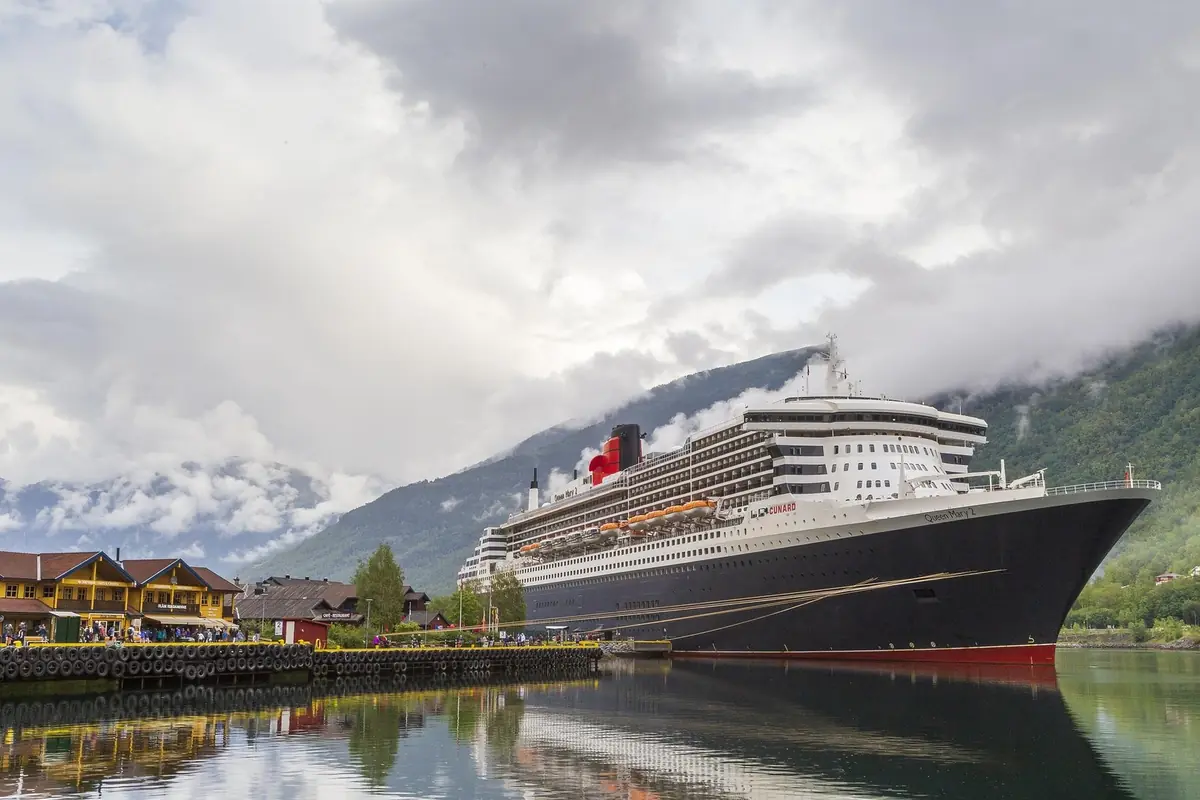
Norway's natural landscape is one of the main reasons travellers visit the country. Deep fjords cut into the mountains, waterfalls plunge from cliffs, enormous lakes reflect snow-covered peaks, and glaciers continue to shape valleys and landscapes.
For visitors, Norway's natural wonders are not limited to a handful of famous viewpoints. They are spread throughout the country, from the southern coast to the Arctic north.
This chapter focuses on the country's major fjords, waterfalls, lakes, glaciers and other natural highlights, together with practical advice for seeing them safely and responsibly.
60.1 What Is a Norwegian Fjord?
A fjord is a long, narrow sea inlet surrounded by steep mountains or cliffs. Norwegian fjords were formed primarily through glacial erosion over very long periods.
When the glaciers retreated, seawater entered the deep valleys they had carved.
The result is the landscape for which Norway is famous: deep blue or green water, steep mountain walls, waterfalls, snow-covered peaks, small farms and villages, narrow side valleys, dramatic viewpoints.
Fjords can extend many kilometres inland, making them feel more like inland lakes than parts of the sea.
60.2 Norway's Most Famous Fjords
Geirangerfjord — one of Norway's most famous fjord landscapes. Highlights include Seven Sisters waterfall, Suitor waterfall, Bridal Veil, Geiranger village, Ørnevegen, Dalsnibba, scenic viewpoints, fjord cruises. The surrounding landscape combines steep mountains, waterfalls and deep water.
Nærøyfjord — one of the narrowest and most dramatic branches of the Sognefjord system. Its landscape includes very steep mountains, waterfalls, small farms, narrow waterways, mountain villages. It is part of the UNESCO-listed West Norwegian Fjords property together with Geirangerfjord.
Sognefjord — Norway's longest and deepest fjord, reaching far into western Norway. The wider region includes numerous branches and destinations, including Flåm, Aurland, Balestrand, Fjærland, Sogndal, Lærdal, Jostedalen. The region can easily fill several days of a Norway itinerary. Hardangerfjord — particularly famous for orchards, waterfalls, mountains, glacier landscapes, villages, Trolltunga. Spring is especially attractive when fruit trees bloom, while autumn brings colourful foliage and harvest scenery.
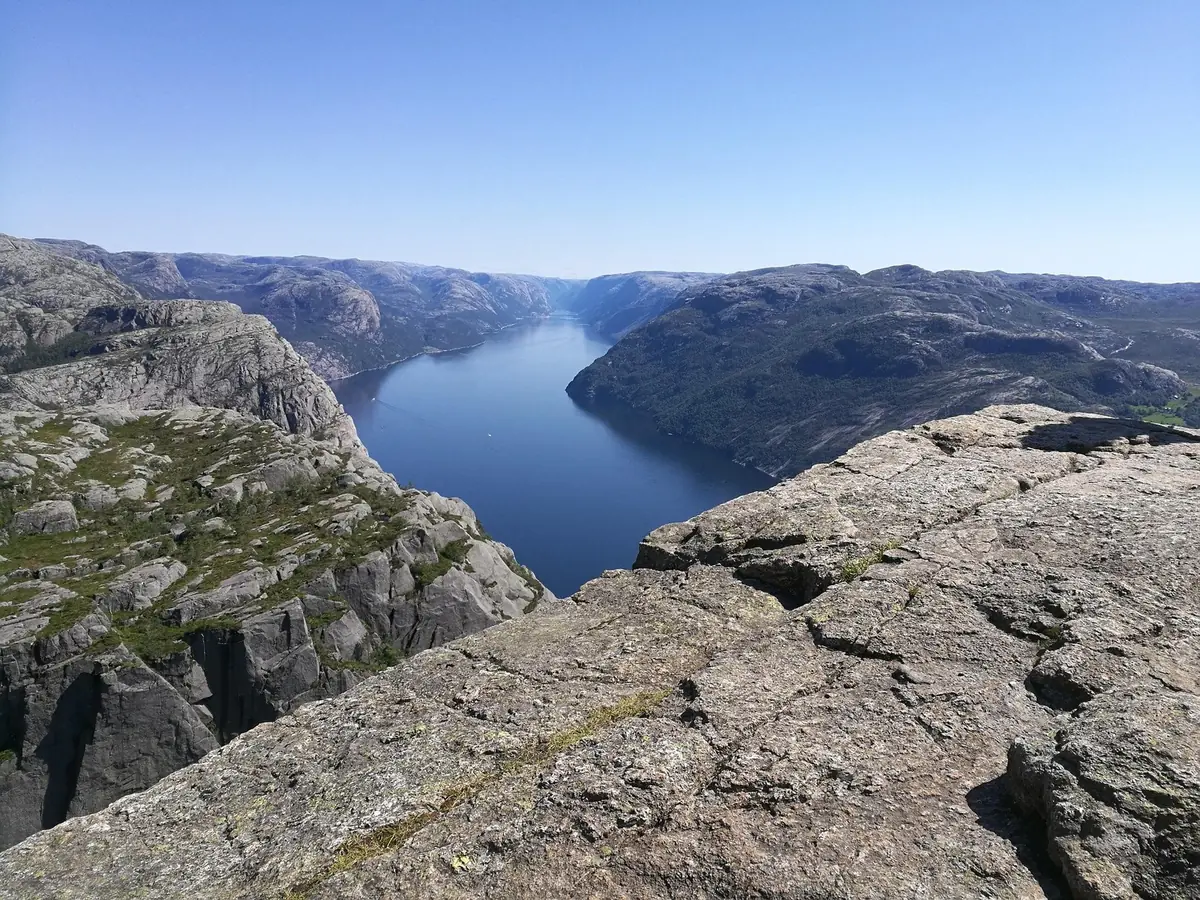
Lysefjord — located close to Stavanger, famous for Preikestolen, Kjerag, Lysebotn, Flørli, fjord cruises, hiking. It is one of the easiest major fjord areas to include in a Stavanger itinerary.
Nordfjord — combines fjord landscapes with mountains and glaciers. Important destinations include Loen, Olden, Stryn, Briksdal, Jostedalsbreen. The region is particularly suitable for travellers who want to combine fjords with mountain activities.
Romsdalsfjord — associated with Åndalsnes, Romsdalen Valley, Trollveggen, Rauma, Molde, scenic mountain roads. It provides access to some of Norway's most dramatic mountain scenery.
60.3 How to Experience a Fjord
Fjord Cruise — the easiest option for many visitors; you sit back while the vessel travels through the landscape.
Kayaking — provides a much closer connection with the water and shoreline, particularly rewarding in calm conditions.
Hiking — many famous viewpoints are reached by hiking above the fjords, e.g. Preikestolen, Kjerag, Trolltunga, Reinebringen.
Driving — mountain roads provide viewpoints that cannot always be reached by boat.
Cycling — possible in several fjord regions, although mountain roads can be demanding.
60.4 The Seven Sisters Waterfall
The Seven Sisters is one of the best-known waterfalls in Norway.
It is located beside Geirangerfjord and consists of several separate streams dropping down the mountain.
The waterfall is best appreciated from the fjord itself, where the full vertical landscape can be seen.
Water flow varies with snowmelt, rainfall, season, temperature. Consequently, the appearance of the waterfall can change considerably during the year.
60.5 Vøringsfossen
Vøringsfossen is one of Norway's most famous waterfalls.
It is located in the Hardangervidda region near Eidfjord.
The waterfall drops dramatically into the Måbødalen valley.
The area has developed viewpoints and walking routes, making it accessible to visitors who do not want a long mountain hike.
Vøringsfossen is especially impressive after periods of substantial water flow.
60.6 Vettisfossen
Vettisfossen is one of Norway's great free-falling waterfalls.
It is located in the Utladalen valley near Årdal.
Unlike roadside waterfalls that can be viewed almost immediately, reaching Vettisfossen involves hiking.
This makes it particularly suitable for travellers who want to combine a natural attraction with an outdoor experience.
60.7 Langfoss
Langfoss is another spectacular waterfall in western Norway.
It falls down a mountainside toward Åkrafjorden.
The waterfall can be viewed from the road, making it an excellent stop for road trippers.
Its location makes it possible to combine the waterfall with a wider journey through western Norway.
60.8 Steinsdalsfossen
Steinsdalsfossen near Norheimsund is unusual because visitors can walk behind the waterfall.
A maintained path leads close to the falling water.
This makes it one of Norway's more accessible waterfall experiences and a popular stop for travellers exploring the Hardanger region.
60.9 Mardalsfossen
Mardalsfossen is located near Eikesdalen in Møre og Romsdal.
The waterfall is particularly associated with its spectacular height and seasonal water flow.
A hiking route leads visitors toward the waterfall.
Because mountain conditions can change quickly, suitable footwear and weather preparation are important.
60.10 The Lakes of Norway
Norway contains thousands of lakes, ranging from small mountain tarns to enormous inland waters.
Lakes are particularly common in mountainous regions because glaciers carved and deepened valleys and basins.
Norwegian lakes provide opportunities for: photography, fishing, hiking, swimming, kayaking, canoeing, camping, wildlife observation.
60.11 Mjøsa
Mjøsa is Norway's largest lake.
It lies between several important towns, including Lillehammer, Hamar, Gjøvik.
The lake is easily incorporated into a southern Norway itinerary.
Visitors can combine it with Lillehammer, Gudbrandsdalen, Oslo, lake cruises, cycling, cultural attractions.
60.12 Hornindalsvatnet
Hornindalsvatnet in western Norway is famous for its great depth and clear water.
It lies near Nordfjord and can be included in journeys through the Stryn and Nordfjord region.
The surrounding mountains make the lake particularly attractive for photography.
60.13 Gjende Lake
Gjende is one of the most famous mountain lakes in Jotunheimen.
Its distinctive green colour contrasts with the surrounding mountains.
The lake is an important starting point for hiking in the Jotunheimen region.
A famous hiking experience is the Besseggen ridge, which provides dramatic views of Gjende and the neighbouring Bessvatnet.
60.14 Norwegian Mountain Lakes
Norway offers a very different lake environment from the Alps.
Norwegian mountain lakes often have: sparse vegetation, rocky shorelines, snow patches, glacial water, remote hiking access, dramatic elevation changes.
The landscape can feel considerably wilder than a traditional European lakeside resort.
60.15 Glaciers
Glaciers are among Norway's most powerful natural features.
They are remnants of the country's long glacial history and continue to shape valleys and landscapes.
The most important glacier region for visitors is around Jostedalsbreen, mainland Europe's largest glacier by area.
The glacier is surrounded by valleys, arms and protected landscapes.
60.16 Jostedalsbreen
Jostedalsbreen is located in western Norway between several major fjord regions.
Important glacier arms include: Briksdalsbreen, Nigardsbreen, Bøyabreen, Kjenndalsbreen.
Different glacier arms offer different visitor experiences. Some can be viewed relatively easily, while others require hiking or guided activities.
60.17 Briksdalsbreen
Briksdalsbreen is one of Norway's best-known glacier arms.
The route toward the glacier passes through the Briksdalen valley.
Visitors can experience mountain scenery, waterfalls, glacier views, valley hiking, guided transport options in the area.
The glacier itself has changed considerably over time, and its position can vary.
Visitors should never approach a glacier front without following local safety instructions.
60.18 Nigardsbreen
Nigardsbreen is another important glacier arm of Jostedalsbreen.
The area is associated with guided glacier experiences.
A glacier may look stable from a distance, but ice can move and collapse unexpectedly.
For glacier walking, use an appropriately qualified guide and follow all local instructions.
60.19 Glacier Safety
Glaciers are beautiful but potentially dangerous.
Never assume that a glacier is safe simply because other people are nearby.
Potential hazards include: crevasses, falling ice, rockfall, meltwater channels, unstable ice bridges, sudden changes in weather, slippery surfaces.
For glacier hiking, proper equipment and professional guidance are essential.
60.20 Natural Rock Formations
Norway also contains remarkable rock formations.
Trolltunga — a dramatic rock ledge above Ringedalsvatnet.
Preikestolen — a near-vertical cliff rising above Lysefjord.
Kjerag — a mountain plateau above Lysefjord famous for Kjeragbolten.
Torghatten — a mountain on the Helgeland coast with a naturally formed hole through the rock.
Hesten — a mountain on Senja offering views toward Segla.
These locations demonstrate how varied Norway's geology can be.
60.21 The Torghatten Hole
Torghatten is one of the most unusual natural landmarks in coastal Norway.
A large opening passes directly through the mountain.
The formation was created by geological processes involving erosion and the action of ice and water over long periods.
A hiking path allows visitors to reach the opening.
The view through the mountain provides an unusual photographic perspective over the surrounding coast.
60.22 Canyons and Valleys
Norway's landscapes are not limited to mountains and fjords.
Deep valleys and canyons also provide dramatic scenery.
Important examples include: Romsdalen, Måbødalen, Utladalen, Gudvangen and Nærøydalen, Innerdalen, Jotunheimen valleys.
Many valleys combine waterfalls, rivers, forests and steep mountains.
60.23 Rivers
Norwegian rivers are closely connected with glaciers, mountains and rainfall.
They are important for: hydroelectric power, fishing, agriculture, wildlife, recreation, landscape formation.
River landscapes are particularly beautiful during spring and early summer when snowmelt increases water flow.
60.24 Best Season for Waterfalls
If waterfalls are a major priority, spring and early summer can be particularly rewarding.
Winter snow accumulates in the mountains. When temperatures rise, snow begins to melt. The resulting water feeds rivers and waterfalls.
However, rainfall also affects waterfall flow, so conditions vary from one location to another.
Autumn can also provide excellent waterfall and landscape photography because of changing vegetation and lower-angle light.
60.25 Best Season for Fjords
Spring — waterfalls become powerful, fruit blossoms appear in some regions, snow remains on mountain peaks, tourist numbers are generally lower than in peak summer.
Summer — long daylight, many transport services, hiking opportunities, green landscapes, busy tourist destinations.
Autumn — autumn colours, fewer visitors, changing weather, beautiful low-angle light.
Winter — snow-covered mountains, quiet villages, short daylight, some seasonal closures, challenging travel conditions.
60.26 Photography Tips for Natural Wonders
Norway's landscapes are ideal for photography, but weather can change quickly.
- For waterfalls: use a tripod where practical, a waterproof cover, a wide-angle lens, fast shutter speeds for detail, longer exposures for soft water effects.
- For fjords: try photographing from viewpoints, boats, roads, hiking trails, villages.
- For mountains: early morning and late afternoon often provide attractive light. Clouds can also add depth and atmosphere.
60.27 Respecting Nature
Norway's natural attractions are shared landscapes, not amusement parks.
Visitors should: stay on marked paths where required, avoid climbing dangerous barriers, never approach unstable cliffs, take all rubbish with them, avoid disturbing wildlife, respect private property, follow local signs, use established toilets where available, keep dogs under control where required.
The most photographed viewpoint is not necessarily the safest viewpoint.
60.28 Choosing Natural Wonders by Travel Style
First-time visitor — Geirangerfjord, Sognefjord, Hardangerfjord.
Hiker — Jotunheimen, Lysefjord, Hardangervidda.
Family — accessible waterfalls, fjord cruises, lake areas.
Photographer — fjords, waterfalls, mountain viewpoints.
Road tripper — scenic fjord roads and waterfall stops.
Arctic traveller — northern fjords and coastal landscapes.
Adventure traveller — glaciers, high mountains and demanding hikes.
Slow traveller — small fjord villages and lake regions.
60.29 A Seven-Day Nature-Focused Journey
- Day 1 — Bergen: explore Bergen and prepare for the fjords.
- Day 2 — Sognefjord: travel into the Sognefjord region.
- Day 3 — Fjord Cruise: explore one of the major fjord branches by boat.
- Day 4 — Glacier Region: continue toward the Jostedalsbreen area.
Day 5 — Waterfalls and Mountains: explore a valley containing waterfalls and mountain scenery.
Day 6 — Hardanger: travel toward the Hardanger region and visit a major waterfall.
Day 7 — Return: return toward Bergen or continue to another destination.
This is only a framework. Actual routes should be adjusted according to transport schedules, weather and seasonal accessibility.
60.30 Natural Wonders: Quick Reference
Geirangerfjord (Møre og Romsdal) — dramatic fjord scenery. Sognefjord (Western Norway) — Norway's longest and deepest fjord. Nærøyfjord (Vestland) — narrow fjord landscape. Hardangerfjord (Vestland) — orchards, waterfalls and mountains. Lysefjord (Rogaland) — Preikestolen and Kjerag. Vøringsfossen (Vestland) — major waterfall. Seven Sisters (Geiranger) — seven waterfall streams. Steinsdalsfossen (Hardanger) — walk behind waterfall. Jostedalsbreen (Western Norway) — major glacier. Gjende (Jotunheimen) — mountain lake. Mjøsa (Eastern Norway) — Norway's largest lake. Torghatten (Helgeland) — natural mountain opening. Trolltunga (Hardanger) — iconic rock formation. Preikestolen (Rogaland) — fjord cliff. Kjerag (Rogaland) — high mountain plateau.
60.31 The Most Important Rule
Norway's natural wonders can look deceptively accessible.
A viewpoint may be only a short distance from a road, while another attraction may require several hours of hiking.
Before visiting any natural attraction, check: 1. Weather. 2. Trail conditions. 3. Opening or access information. 4. Transport. 5. Parking. 6. Daylight. 7. Your own experience level. 8. Local warnings.
Do not judge difficulty from photographs alone.
Final Thoughts
Norway's fjords, waterfalls, lakes and mountains form a connected natural landscape rather than a collection of isolated attractions.
A waterfall may come from a glacier. The glacier may sit above a fjord. The fjord may lead to a coastal village. The village may connect to a mountain road.
This relationship is what makes travelling through Norway so rewarding.
You can spend one morning beside a deep fjord, hike through a mountain valley in the afternoon and watch a waterfall descend from snow-covered peaks before sunset.
The best approach is not to rush from one famous viewpoint to another.
Choose a region, slow down and explore the landscape around it.
Norway's greatest natural attraction is ultimately the landscape itself.