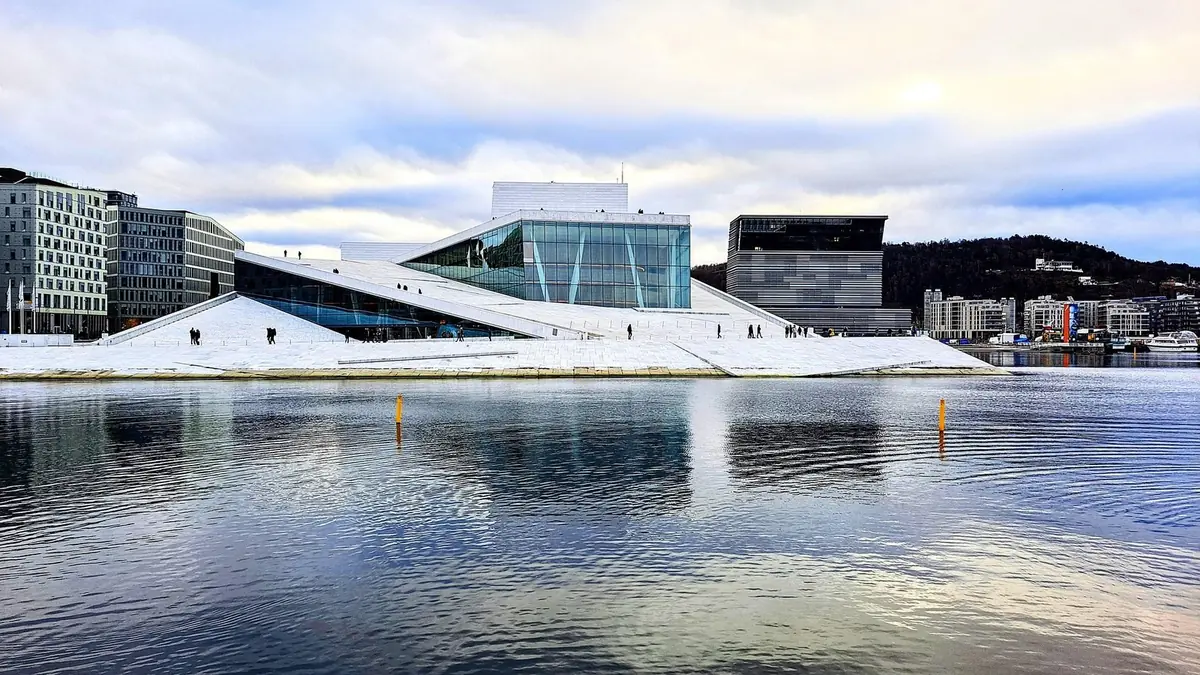
Oslo is Norway's capital and largest city, situated between the Oslofjord and the forests of Eastern Norway. What makes Oslo particularly interesting for visitors is the combination of city life and nature: museums, modern architecture, parks, waterfront areas and forests can all be reached within the same trip.
Oslo is also a relatively compact city. Many central attractions can be explored on foot, while buses, trams, metro trains and ferries make it easy to reach areas farther from the centre.
Oslo at a Glance
- Country: Norway
- Capital: Oslo
- Region: Eastern Norway
- Main airport: Oslo Airport, Gardermoen
- Currency: NOK
- Recommended first visit: 2–3 days
- Best for: Museums, architecture, food, history, shopping, parks and outdoor activities
10 Places You Should Consider Visiting
VisitOSLO's current top-attractions list includes:
- Akershus Fortress
- Oslo Opera House
- Fram Museum
- Holmenkollen Ski Museum & Tower
- MUNCH
- The National Museum
- Natural History Museum
- Nobel Peace Center
- Vigeland Sculpture Park
- Norsk Folkemuseum
These are not the only attractions worth visiting. Depending on your interests, Oslo also offers the Royal Palace, Oslo City Hall, Aker Brygge, Tjuvholmen, Deichman Bjørvika, Ekebergparken, Bygdøy and the Oslofjord islands.
2.1 Akershus Fortress
Akershus Fortress is one of Oslo's most important historic landmarks. The fortress overlooks the Oslofjord and has played an important role in the city's history for centuries. It is located close to the waterfront and can easily be combined with a walk around the harbour.
Why visit? Historic architecture, Oslofjord views, photography, history, easy access from central Oslo.
Nearby: combine your visit with Oslo City Hall → Nobel Peace Center → Aker Brygge → Tjuvholmen.
2.2 Oslo Opera House
The Norwegian National Opera & Ballet occupies Oslo's famous Opera House in the Bjørvika waterfront area.
One of its most distinctive features is the large sloping roof, which visitors can walk across.
The building is part of Oslo's modern waterfront landscape and is particularly attractive for photography.
Photo idea: visit around sunrise, sunset, or evening — the surrounding waterfront and modern architecture create different views throughout the day.
2.3 MUNCH
MUNCH is dedicated to the work of Norwegian artist Edvard Munch.
The museum is located in Bjørvika and is one of Oslo's major cultural attractions. Visit Norway lists MUNCH among the city's leading attractions and describes its collection as one of the world's largest collections of Munch's paintings.
Allow 2–3 hours if you want to explore the museum properly.
Combine with: Opera House → Deichman Library → MUNCH → waterfront walk. This creates an easy walking itinerary in Bjørvika.
2.4 Deichman Bjørvika
Deichman Bjørvika is Oslo's main public library.
Even travellers who are not interested in spending hours reading can visit for its architecture and its location beside some of Oslo's most modern landmarks.
It is particularly easy to include on a walking route around Bjørvika.
Visit Norway includes Deichman Bjørvika among Oslo's top attractions.
2.5 Vigeland Sculpture Park
Vigeland Sculpture Park is located inside Frogner Park and features sculptures by Norwegian sculptor Gustav Vigeland.
It is one of Oslo's best-known outdoor attractions.
Why visit? Outdoor art, photography, walking, family-friendly visit, no complicated transport required from central Oslo.
Visit Norway identifies Vigeland Sculpture Park as one of Oslo's principal attractions.
Suggested time: 1–2 hours.
2.6 Holmenkollen
Holmenkollen is one of Oslo's most recognizable areas and is associated with Norway's long skiing tradition.
The Holmenkollen Ski Museum & Tower offers panoramic views over Oslo and the surrounding landscape.
VisitOSLO notes that Holmenkollen can be reached from central Oslo by metro in approximately 20–30 minutes, depending on the journey. The area is also an entry point to Nordmarka, a major outdoor recreation area.
- Summer: hiking, viewpoints, walking, outdoor activities.
- Winter: snow, skiing, winter scenery.
- Suggested time: 2–4 hours.
2.7 Bygdøy
Bygdøy is a peninsula known for several museums and outdoor areas.
Important attractions include: Fram Museum, Norsk Folkemuseum, Kon-Tiki Museum, maritime museums and cultural attractions.
Visit Norway lists several Bygdøy museums among Oslo's major attractions.
Recommended strategy: do not try to visit every museum in one afternoon. Choose 2–3 attractions according to your interests.
2.8 Oslofjord & the Islands
Oslo is not only a city destination.
The Oslofjord provides opportunities to visit islands, swim during warmer months, take boat trips and enjoy views of the city from the water.
Visit Norway notes that visitors can go island-hopping in summer and that local ferries connect central Oslo with several islands.
Good for: summer, families, photography, swimming, relaxing, budget-friendly outdoor activities.
2.9 Aker Brygge & Tjuvholmen
Aker Brygge and Tjuvholmen are waterfront areas combining restaurants, shops, architecture and views across the fjord.
Tjuvholmen is particularly associated with contemporary architecture and art.
These areas work well as an evening destination after sightseeing.
2.10 Oslo's Green Spaces
One of Oslo's unusual characteristics is how closely nature is connected to the city.
The city has parks and access to forest areas, while the Akerselva river runs through Oslo.
For travellers who want a break from museums, a walk along the river or through one of the city's parks can be added to almost any itinerary.
ONE-DAY OSLO ITINERARY
Morning
09:00 — Oslo Central Station. Start your day in the city centre.
09:15 — Oslo Opera House. Walk across the roof and explore the waterfront.
10:00 — Deichman Bjørvika. Short visit.
10:30 — MUNCH. Spend approximately 2 hours.
12:30 — Lunch. Explore the Bjørvika waterfront.
Afternoon
14:00 — Oslo City Hall. Walk towards the harbour.
14:30 — Nobel Peace Center. Optional museum visit.
15:30 — Aker Brygge. Walk along the waterfront.
16:00 — Akershus Fortress. Explore the historic fortress and views.
Evening
18:00 — Aker Brygge / Tjuvholmen. Dinner and waterfront walk.
20:00 — Return to your accommodation or explore Oslo's evening life.
TWO-DAY OSLO ITINERARY
Day 1 — City & Waterfront
Opera House → Deichman Library → MUNCH → Oslo City Hall → Nobel Peace Center → Akershus Fortress → Aker Brygge → Tjuvholmen
Day 2 — Culture & Views
- Morning: Vigeland Sculpture Park → Bygdøy (choose: Fram Museum, or Norsk Folkemuseum, or Kon-Tiki Museum)
- Afternoon: Holmenkollen → Holmenkollen Ski Museum & Tower → Oslo viewpoint
- Evening: Return to central Oslo.
GETTING AROUND OSLO
Oslo has an integrated public transport system covering: metro, tram, bus, local trains, ferries.
VisitOSLO states that the Ruter system covers these forms of public transport, while ticketing depends on zones.
The Ruter app can be used to buy tickets and check departures.
Walking: central Oslo is compact enough that many attractions can be combined into walking routes.
Visit Norway even provides a suggested 10,000-step Oslo route covering areas including the waterfront, MUNCH, Deichman, SALT and other attractions.
ARRIVING IN OSLO
Oslo Airport Gardermoen is Norway's main airport.
From the airport, travellers can reach central Oslo by: Airport Express Train, local train, bus, taxi, rental car.
Visit Norway notes that the Airport Express Train takes approximately 20 minutes to central Oslo, while the local train takes slightly longer and can be cheaper.
Important: always check the current timetable and fare before travelling because schedules and prices can change.
OSLO BUDGET PLANNER
Your Oslo budget will depend heavily on accommodation, restaurant choices, transport and paid attractions.
Budget traveller — Accommodation: hostel/budget room. Food: supermarket + inexpensive meals. Transport: walking + public transport. Activities: free attractions + selected paid museums.
Mid-range traveller — Accommodation: 3–4 star hotel. Food: combination of restaurants and supermarkets. Transport: public transport. Activities: several museums and attractions.
Premium traveller — Accommodation: higher-end hotel. Food: restaurants. Transport: taxi/private transport where convenient. Activities: multiple paid experiences.
Always check current prices before booking.
BEFORE YOU TRAVEL
Opening hours, admission prices, transport fares, events and timetables can change.
Always check the attraction's official website and current transport information shortly before your trip.
For public transport, check Ruter/Entur; for destination information, check official VisitOSLO and Visit Norway resources.
Oslo in One Sentence
Oslo is where Norwegian city life, art, history, architecture, the fjord and outdoor nature come together in one compact capital.