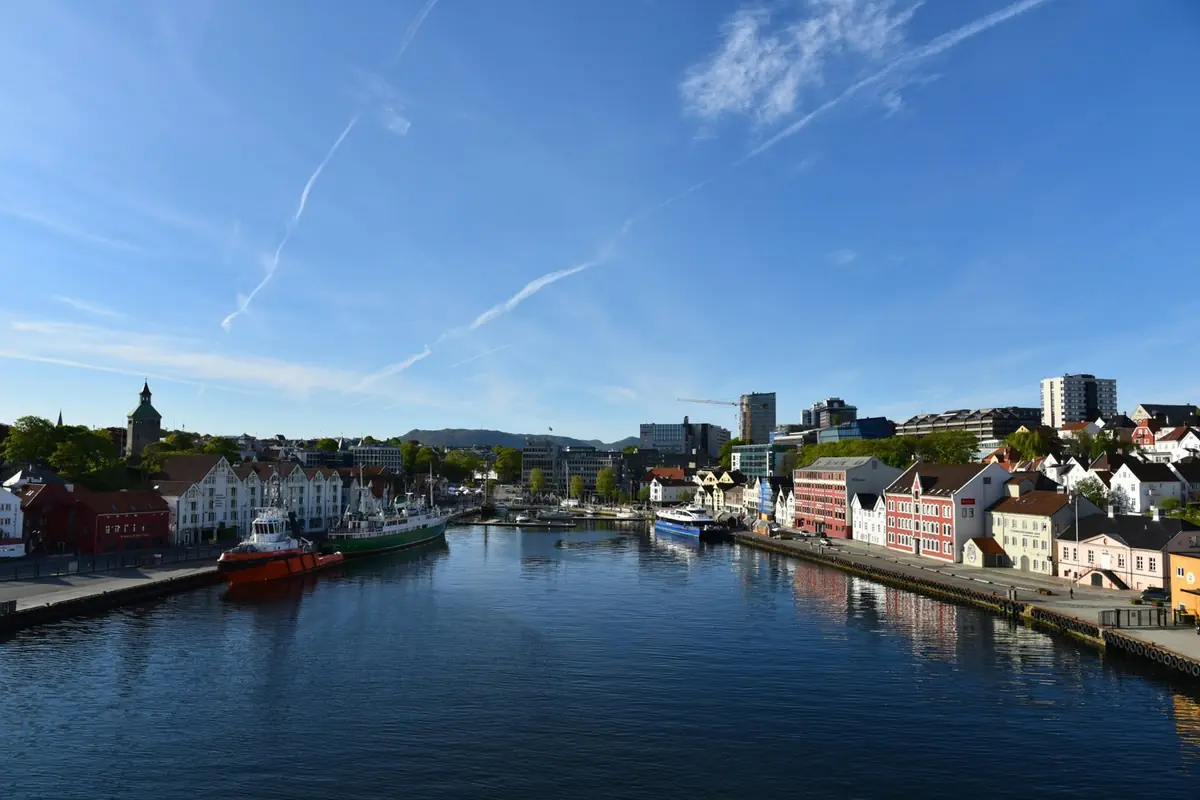
Stavanger is one of Norway's most exciting bases for combining city life with spectacular nature. Within a relatively compact region, travellers can explore historic wooden streets, North Sea beaches, Viking history, museums, dramatic fjords and some of Norway's most famous mountain hikes.
The highlight for many visitors is the Lysefjord, home to the world-famous Preikestolen (Pulpit Rock) and Kjerag. The Stavanger region also provides easy access to the beaches and open landscapes of Jæren.
4.1 Stavanger at a Glance
- Region: Rogaland
- Country: Norway
- Main attractions: Old Stavanger, Lysefjord, Preikestolen, Kjerag, Sverd i fjell, Jæren beaches
- Ideal stay: 2–4 days
- Best for: Hiking, fjords, beaches, history, food, photography and road trips
Stavanger's city centre is compact and easy to explore on foot. The historic harbour, colourful streets and preserved wooden buildings make the city particularly attractive for a short city break.
The region is also an excellent base for outdoor adventures. Preikestolen is approximately a 40-minute drive from Stavanger, while the Lysefjord can be explored by sightseeing cruise, RIB, kayak or hiking.
4.2 Old Stavanger — Gamle Stavanger
One of the first places to explore is Gamle Stavanger, the city's historic old town.
The area contains 173 preserved wooden buildings, many painted white, along narrow streets and lanes. It is one of the most atmospheric parts of Stavanger and is located only a short walk from the harbour.
What to do: walk through Øvre Strandgate, photograph the traditional wooden houses, visit small galleries and craft shops, explore the Norwegian Canning Museum, visit the Norwegian Printing Museum, walk down towards the harbour, continue towards Stavanger's waterfront.
Photography tip: early morning and evening are particularly good times for photography because the streets are quieter and the soft light works beautifully with the white wooden houses.
Travel etiquette: remember that Gamle Stavanger is a living residential neighbourhood. The beautiful houses are people's homes, so visitors should keep noise down and avoid entering private areas.
4.3 Fargegaten — The Colourful Street
Øvre Holmegate, commonly known as Fargegaten, is one of Stavanger's most recognisable streets.
Its colourful buildings, cafés, restaurants and shops make it an excellent stop during a city walk.
It is especially attractive for: street photography, coffee breaks, evening walks, social-media photos, short city itineraries.
A simple walking route can combine: Vågen → Fargegaten → Stavanger Cathedral → Old Stavanger → Harbour.
4.4 Stavanger Harbour & Vågen
The harbour is the natural centre of Stavanger's visitor experience.
From here you can explore: Old Stavanger, Colour Street, restaurants and cafés, Stavanger Cathedral, museums, fjord cruises, RIB tours, waterfront architecture.
The harbour is also the departure point for several Lysefjord experiences.
For travellers with limited time, staying close to Vågen makes it possible to explore many attractions without relying heavily on transport.
4.5 Norwegian Petroleum Museum
Stavanger has a strong connection with Norway's offshore petroleum industry.
The Norwegian Petroleum Museum provides visitors with an introduction to Norway's petroleum history and the technology, people and society connected with offshore energy.
The museum is located close to Stavanger harbour and can easily be combined with a waterfront walking tour.
Recommended for: families, first-time visitors, visitors interested in technology, anyone wanting to understand Stavanger's modern history.
4.6 Sverd i fjell — Swords in Rock
At Møllebukta on Hafrsfjord, three enormous swords rise from the rock.
The monument is called Sverd i fjell, or Swords in Rock.
The monument commemorates the Battle of Hafrsfjord and consists of three swords symbolising peace, unity and freedom. It was created by artist Fritz Røed and unveiled in 1983.
Møllebukta is also a recreational area with a beach and walking opportunities.
Why visit? This is one of the easiest historical attractions to combine with a Stavanger city trip because you can see the monument and enjoy the coastal surroundings in the same visit.
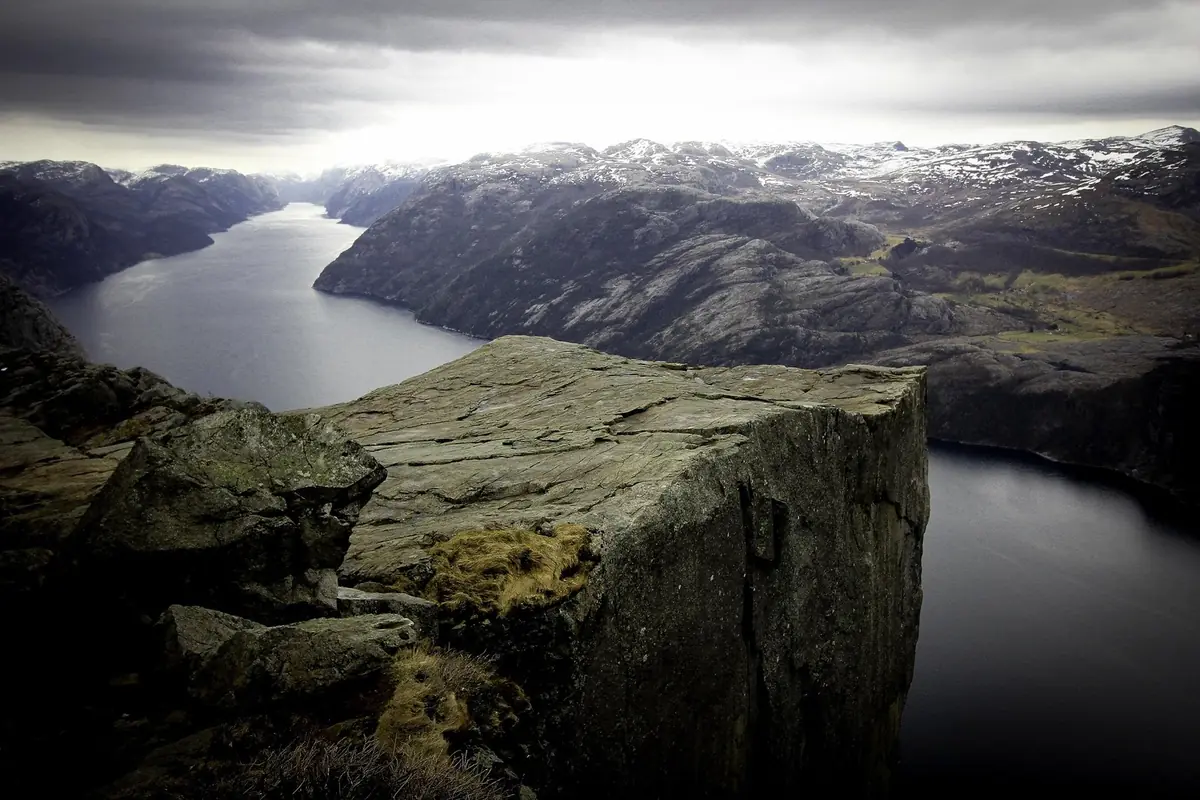
4.7 Preikestolen — Pulpit Rock
Norway's Iconic Fjord Viewpoint
For many international visitors, Preikestolen is the main reason to visit the Stavanger region.
The enormous rock plateau rises approximately 604 metres above the Lysefjord and provides one of Norway's most recognisable views.
The hike is approximately 8 kilometres round trip and normally takes around 4–5 hours, although the actual time varies according to fitness, weather, trail conditions and breaks.
Difficulty: Preikestolen is considered a moderately demanding hike. The trail includes forest, wetland sections, rocky terrain, steep sections, stone steps, Sherpa-built sections.
The trail is well prepared, but visitors should still treat it as a genuine mountain hike rather than an ordinary city walk.
Getting to Preikestolen
By car — From Stavanger, drive through the Ryfast tunnel system towards Ryfylke and follow signs for Preikestolen. The official Preikestolen parking area operates year-round.
By bus — Seasonal bus services connect Stavanger, Sandnes and Jørpeland with Preikestolen Mountain Lodge. Exact schedules vary by season, so travellers should check current timetables before departure.
By organised tour — Guided trips are available for visitors who prefer transport, planning and hiking guidance to be organised together.
4.8 Preikestolen Parking
Preikestolen has dedicated parking facilities.
The official parking information currently lists: parking for approximately 400 cars at P1, additional parking at P2, EV charging stations, toilets, bus facilities, tourist information, 24-hour operation.
The current parking system uses automatic barriers and payment facilities. Prices can change, so travellers should check the official Preikestolen website immediately before their trip.
Important: do not assume that the parking price shown in an older travel blog is still correct. Always check the official Preikestolen parking page before travelling.
4.9 What to Take on the Preikestolen Hike
Even during summer, mountain conditions can change quickly.
Pack: hiking shoes with good grip, waterproof jacket, warm layer, food, plenty of drinking water, phone, power bank, small first-aid kit, hat and gloves when conditions require them, offline map or downloaded route information.
The official tourism guidance specifically recommends sturdy hiking footwear, warm clothing, food and water.
Safety rule: do not judge Norwegian mountain weather from the conditions in Stavanger city centre. A sunny city can have completely different conditions on the mountain.
4.10 When Should You Hike Preikestolen?
Preikestolen is open for hiking throughout the year, but conditions vary significantly.
The main hiking season is generally April–October. Winter hiking can be possible, but snow and ice can make the route considerably more demanding. Guided hiking is recommended during winter conditions.
Summer — Advantages: long daylight, generally easier trail conditions, green landscape, excellent photography. Disadvantages: more visitors, busy parking, crowded viewpoint.
Spring and autumn — these seasons can provide: fewer visitors, dramatic weather, autumn colours, atmospheric photography.
Winter — winter can produce spectacular scenery but requires much more preparation. Check: weather, ice, snow, visibility, daylight, trail conditions.
4.11 Lysefjord Cruise
Not everyone wants to hike for several hours. Fortunately, the Lysefjord can also be experienced from the water.
A cruise from Stavanger can take visitors deep into the fjord, offering views of: Preikestolen, waterfalls, steep cliffs, mountain landscapes, small settlements, wildlife.
Some cruises use electric vessels, while other experiences include RIB boats.
Cruise or hike? Preikestolen hike — adventure & panoramic views. Fjord cruise — relaxed sightseeing. RIB tour — speed & excitement. Cruise + hike — maximum variety. Kayaking — close-to-nature experience.
4.12 Kjerag & Kjeragbolten
If Preikestolen is not challenging enough for you, the next major adventure is Kjerag.
Kjerag rises to approximately 1,000 metres above the Lysefjord.
Its most famous attraction is Kjeragbolten, a large boulder wedged between mountain cliffs.
The hike is significantly more demanding than Preikestolen.
The route is approximately 11 kilometres round trip, with an expected hiking time of around 6 hours in normal conditions; other official guidance gives a broader range of approximately 6–10 hours depending on conditions and hikers.
What makes Kjerag different? The trail includes steep climbs, rocky terrain, chains/wires in some sections, large elevation changes, exposed mountain areas.
The official guidance warns that wet conditions can make parts of the trail slippery.
Who should attempt Kjerag? Kjerag is better suited to travellers who are comfortable with long hikes, have good physical fitness, have suitable hiking equipment, check weather and trail conditions, understand mountain safety.
If you are inexperienced or uncertain, consider a guided hike.
4.13 Flørli — The 4,444 Steps
Flørli is a small, roadless settlement on the Lysefjord famous for its historic hydroelectric infrastructure and the Flørli Stairs.
The staircase contains 4,444 steps, making it one of the area's most distinctive hiking experiences.
Flørli is particularly interesting for travellers who want something different from the two famous hikes.
Ideal for: adventure travellers, photography, history, hiking, overnight stays, slow travel.
Because Flørli is reached by boat rather than ordinary road access, it works especially well as an overnight or dedicated day-trip destination.
4.14 Lysefjorden Rundt
For serious hikers, the Lysefjorden Rundt is a multi-day adventure around the fjord.
The route is more than 100 kilometres and is divided into multiple stages. It connects famous destinations including Preikestolen, Kjerag and Flørli.
This is not a normal tourist day trip. It requires: good fitness, proper hiking equipment, route planning, weather awareness, accommodation planning, food and water planning.
For most visitors, the shorter individual hikes and fjord cruises are more practical.
4.15 Jæren — Beaches Near Stavanger
One of the biggest surprises for first-time visitors to Stavanger is that the region is not only about mountains and fjords.
To the south lies Jæren, an open coastal landscape famous for long sandy beaches.
The Norwegian Scenic Route Jæren currently extends approximately 130 kilometres between Bore and Flekkefjord and is one of Norway's 18 official Scenic Routes.
Popular beaches include: Solastranda, Borestranda, Orrestranda, Refsnesstranda, Brusand, Ognasanden, Hellestøstranda, Ølbergstranda.
Orrestranda is almost five kilometres long and is among Norway's longest beaches.
4.16 Sola Beach
Solastranda is one of the easiest beaches to visit from Stavanger.
It is close to Stavanger Airport and is popular for: walking, swimming, surfing, kitesurfing, photography, watching sunsets.
The beach is approximately a short drive from central Stavanger.
Photography idea: visit in the evening when the low sun creates long shadows across the sand and dunes.
4.17 A Perfect 1-Day Stavanger Itinerary
- Morning: 08:30 Breakfast, 09:00 Old Stavanger, 10:00 Harbour & Vågen, 10:30 Fargegaten, 11:00 Stavanger Cathedral area, 11:30 Norwegian Petroleum Museum.
- Afternoon: 13:00 Lunch, 14:00 Sverd i fjell & Møllebukta, 15:30 Sola Beach, 17:30 Return to Stavanger.
- Evening: 18:30 Dinner, 20:00 Waterfront evening walk.
This itinerary works particularly well for travellers who are not planning a major mountain hike.
4.18 A Perfect 2-Day Stavanger Itinerary
Day 1 — Stavanger City: Morning — Old Stavanger, Stavanger Cathedral, Fargegaten, Harbour. Afternoon — Norwegian Petroleum Museum, Waterfront, Sverd i fjell. Evening — Dinner, harbour walk.
Day 2 — Lysefjord: Choose one — Option A: Preikestolen (early departure, hike, return to Stavanger). Option B: Fjord Cruise (Stavanger → Lysefjord → Preikestolen viewpoint from the water → return). Option C: Cruise + Hike (for travellers wanting both the fjord and mountain experience, a combined cruise-and-hike experience can be arranged during suitable seasons).
4.19 A Perfect 3-Day Stavanger Itinerary
- Day 1: Stavanger city + Old Stavanger + museums.
- Day 2: Preikestolen.
- Day 3: Choose one — Lysefjord cruise, Kjerag, Jæren beaches, Flørli, Sola + Jæren road trip.
This gives travellers the flexibility to adapt the trip to weather conditions.
4.20 Rainy-Day Stavanger Plan
Rain should not automatically cancel your Stavanger trip. Norway's southwest coast frequently experiences changing weather, so have a backup plan.
Rainy-day attractions: Norwegian Petroleum Museum, IDDIS, Stavanger Maritime Museum, Stavanger Art Museum, Norwegian Canning Museum, cafés, shopping, harbour walk between weather periods.
For outdoor attractions, check conditions before leaving rather than cancelling an entire day based only on the weather forecast.
4.21 Stavanger Travel Tips
Tip 1 — Check the mountain weather: city weather is not mountain weather.
Tip 2 — Start early: early starts can reduce crowding on popular hikes during busy periods.
Tip 3 — Wear proper footwear: ordinary trainers are not ideal for demanding mountain trails.
Tip 4 — Bring layers: the temperature and wind can change quickly.
Tip 5 — Reserve popular experiences: during busy periods, cruises and organised hiking transfers can sell out.
Tip 6 — Don't underestimate distances: Norwegian roads can be slow because of mountains, tunnels, ferries and winding roads.
Tip 7 — Check transport before leaving: use current public transport and journey-planning information rather than relying on old schedules.
4.22 Stavanger Budget Guide
Actual costs vary by season, booking time and travel style. For your personal budget, create three categories:
Budget Traveller — hostel/camping, supermarket meals, public transport, free city attractions, self-guided hikes.
Mid-Range Traveller — hotel, restaurant meals, fjord cruise, public transport/taxi combination, paid museums.
Premium Traveller — high-end hotel, private transfers, guided mountain experiences, premium fjord cruises, fine dining.
4.23 Suggested Routes
Route 1 — Lysefjord: Stavanger → Jørpeland → Preikestolen → Lysefjord → Flørli → Lysebotn → Kjerag.
Route 2 — Jæren coast: Stavanger → Sola → Bore → Orre → Brusand → Ogna → Flekkefjord.
4.25 Stavanger Quick Reference
| Old Stavanger | 1–2 hrs | walking/photography |
|---|---|---|
| Fargegaten | 30–60 min | city walk |
| Petroleum Museum | 1.5–2 hrs | museum |
| Sverd i fjell | 30–60 min | history/photo |
| Sola Beach | 1–3 hrs | beach/walk |
| Preikestolen | 4–5 hrs | hiking |
| Lysefjord cruise | ~3–4 hrs | sightseeing |
| Kjerag | 6–10 hrs | demanding hike |
| Flørli | full day/overnight | hiking/history |
| Jæren Scenic Route | 1–several days | road trip |
Stavanger in One Sentence
Come for Stavanger's wooden streets, stay for the fjords, and leave with memories of Preikestolen, Kjerag and the wild coastline of Jæren.
Official Planning Resources
Official sources to check before you go: Visit Norway — Stavanger Region, Preikestolen 365, Region Stavanger, Norwegian Scenic Routes, Entur and Kolumbus (public transport), and the Norwegian Public Roads Administration (road status).
Hiking conditions, transport schedules, parking fees and tour availability can change, so verify these details before travelling.